Itinerary ideas, cultural insights, luxury tips and practical planning guides for every India traveller.
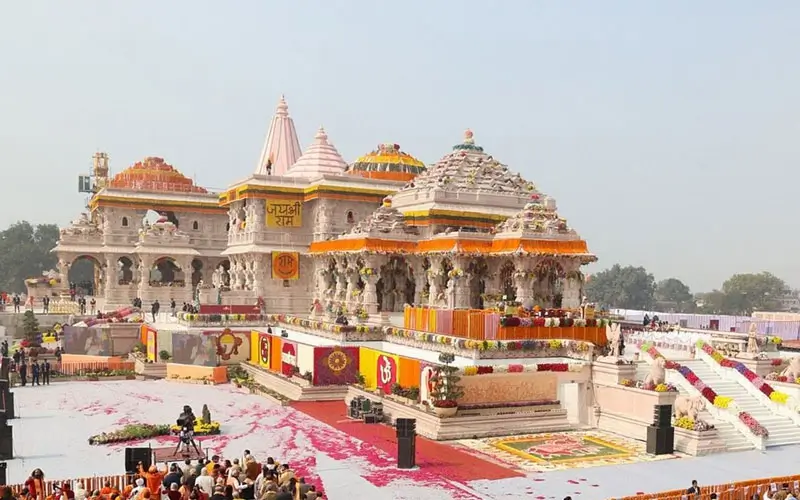
For Hindus living outside India, faith often survives through memory. It exists in prayers whispered in foreign homes, in festivals celebrated away from ancestral land, and in stories passed down by elders who once walked the sacred soil themselves. Ayodhya occupies a special place in this inherited faith. It is spoken of with reverence, emotion, and longing. Yet for many NRIs, Ayodhya remains an idea rather than an experience.
The Ayodhya Ram Mandir changes this distance. It transforms inherited devotion into lived understanding. More than a destination, it represents a return — not just to a place, but to values, identity, and spiritual grounding. Beneath the visible structure lie untold stories that explain why Ayodhya continues to call devotees across oceans and generations.
Understanding these stories is essential, especially for NRIs planning a visit. Ayodhya is not meant to be rushed or consumed as a sightseeing stop. It asks for attention, patience, and emotional presence. When approached with awareness, the journey becomes profoundly transformative.
For NRIs, Ayodhya often exists through storytelling rather than geography. Grandparents spoke of Ram Rajya as an ideal. Parents recited verses from Ramcharitmanas during prayers. Temples abroad kept the image of Ram alive, even when the land of his birth felt distant.
Ayodhya represents continuity across displacement. Migration may have changed language, lifestyle, and landscape, but devotion remained intact. The Ayodhya Ram Mandir embodies this continuity. It stands as a reminder that faith does not weaken with distance; it waits for reconnection.
When NRIs visit Ayodhya, they often feel an unexpected emotional release. The place validates beliefs carried quietly for decades. What was once symbolic becomes tangible.
Experience the spiritual aura of Ayodhya and Shri Ram Mandir with well-organized travel, smooth arrangements and trusted local assistance for a peaceful darshan.
Ayodhya’s spiritual life never depended solely on grand structures. During periods when physical expression of devotion faced obstacles, faith continued within homes, oral traditions, and quiet rituals. Saints, householders, and wandering devotees preserved Ram bhakti without seeking recognition.
These untold stories matter deeply. They explain why Ayodhya’s spiritual energy never faded. The Ayodhya Ram Mandir rises not only from stone and craftsmanship, but from centuries of invisible devotion accumulated through restraint, patience, and unwavering belief.
For NRIs, understanding this resilience adds depth to darshan. It reveals that devotion is not bound to geography alone; it is sustained by commitment.
Many first-time visitors approach Ayodhya expecting a temple experience similar to others they have known. What they encounter is different. Ayodhya does not emphasize grandeur over meaning. Its spiritual power lies in subtlety.
Lord Ram is revered not as a miracle-working deity, but as the embodiment of dharma. His life represents balance between duty and compassion, authority and humility. The Ayodhya Ram Mandir therefore serves as a space for reflection on one’s own conduct.
For NRIs navigating dual identities and moral complexities in global environments, this message resonates deeply. Ayodhya does not instruct through sermons. It inspires through example.
Cultural identity often weakens across generations abroad. Language fades. Rituals simplify. Context gets lost. Ayodhya offers restoration.
Walking through Ayodhya allows NRIs to see how belief integrates with daily life. Temples coexist with homes. Rituals flow naturally into routine. Spirituality is not separate from society.
The Ayodhya Ram Mandir stands at the center of this ecosystem. Visiting it helps NRIs understand Hinduism not as a set of isolated practices, but as a lived philosophy woven into community life.
This realization strengthens identity without imposing rigidity.
The architecture of the Ram Mandir communicates meaning silently. Every proportion, axis, and elevation follows symbolic principles. The temple’s verticality represents ascent of consciousness. Its layered spaces reflect stages of inner awareness.
Many visitors admire the structure visually without understanding its intent. For NRIs, learning this architectural language transforms darshan into meditation. Movement through the temple mirrors an inward journey.
The Ayodhya Ram Mandir thus becomes not only a place of worship, but a tool for contemplation.
NRIs often arrive in Ayodhya with expectations shaped by imagination. What unfolds instead is emotional unpredictability. Tears arise without warning. Silence feels comforting. Time slows.
This emotional response is common and deeply personal. It reflects the convergence of memory, faith, and presence. The distance once felt between belief and reality dissolves.
For many NRIs, this moment marks a turning point. Ayodhya stops being a story inherited from elders and becomes part of personal experience.
Many NRIs choose to visit Ayodhya during midlife or retirement. This timing is significant. With responsibilities behind them and reflection ahead, Ayodhya offers perspective.
The teachings embodied by Lord Ram gain relevance with age. Questions of duty, sacrifice, and balance resonate differently. The Ayodhya Ram Mandir becomes a place not of answers, but of clarity.
This is why elders often describe Ayodhya yatra as fulfilling rather than exciting. It settles something within.
Faith practiced abroad often adapts to convenience. Ayodhya reintroduces intentionality. Rituals take time. Silence has space. Observation replaces haste.
NRIs often return from Ayodhya with renewed discipline in prayer, reflection, and ethical living. The journey influences daily life long after physical departure.
The Ayodhya Ram Mandir thus functions as a bridge, reconnecting belief with practice.
Ayodhya reveals itself gradually. Visitors who rush through often miss its essence. NRIs, in particular, benefit from guided understanding that explains context, symbolism, and history.
Group pilgrimages or well-planned visits help structure this understanding. They prevent the experience from becoming superficial or overwhelming.
A meaningful visit requires openness rather than itinerary pressure.
Plan a smooth and meaningful visit to Shri Ram Mandir with reliable travel services, comfortable transport and on-ground assistance for a serene spiritual experience.
Many devotees return to Ayodhya multiple times. Each visit reveals something new. Personal growth changes perception. What felt emotional once may feel peaceful later.
For NRIs, this evolving relationship strengthens spiritual grounding. Ayodhya becomes a reference point rather than a destination checked off a list.
The Ayodhya Ram Mandir anchors this relationship, offering continuity across life stages.
In a world of constant movement and change, Ayodhya represents stillness rooted in values. It reminds Hindus worldwide that identity does not depend on geography alone.
For NRIs raising future generations abroad, visiting Ayodhya offers context that books and temples overseas cannot fully provide. It shows children where stories originate and why they matter.
This transmission of understanding ensures continuity beyond borders.
The call to Ayodhya often arises quietly. It may follow personal loss, life transition, or spiritual questioning. The timing feels intuitive rather than planned.
Answering this call brings alignment. The visit restores balance between external success and inner grounding.
The Ayodhya Ram Mandir stands ready, not demanding attention, but receiving it with stillness.
It reconnects inherited faith with lived experience and strengthens cultural identity.
It represents ethical ideals and spiritual continuity rather than ritual alone.
Yes, with proper planning, it is accessible and deeply fulfilling.
Yes, emotional responses are common due to memory, faith, and presence.
Group visits help provide context, structure, and deeper understanding.
Yes, it provides living context that supports cultural continuity.
No, it also represents philosophy, values, and ethical living.
Enough time to reflect calmly, rather than rushing through rituals.
Yes, it transforms observation into conscious spiritual experience.
The spiritual message resonates strongly during reflective life stages.
Fill in the details below. Our expert consultant will respond within 4 hours with a bespoke itinerary crafted just for you — completely free, no obligation.