Itinerary ideas, cultural insights, luxury tips and practical planning guides for every India traveller.
Jaipur is not only the royal capital of Rajasthan but also one of India’s most vibrant centers of traditional craftsmanship. Foreign travelers arriving on a Golden Triangle Tour often find themselves enchanted by colorful markets, ornate showrooms, and artisan workshops that showcase centuries-old skills. Among the most iconic crafts that define Jaipur’s artistic identity are Blue Pottery Jaipur and Bagru Print Rajasthan. While both reflect heritage and local mastery, they are entirely different art forms rooted in distinct materials, techniques, and histories.
For international tourists, distinguishing authentic handmade pieces from mass-produced imitations can be confusing. Market shelves are filled with items labeled as handmade or traditional, yet many are factory replicas made for quick export. Understanding the difference between genuine Jaipur handicrafts, high-quality artisan work, and tourist-market copies requires informed observation.
This visual and cultural guide explains how to recognize true craftsmanship, appreciate the artistry behind both traditions, and shop responsibly while exploring Jaipur’s heritage markets.
Blue Pottery Jaipur stands apart from conventional clay ceramics. Unlike traditional earthen pottery, authentic Blue Pottery does not use regular clay. Instead, it is crafted from a distinctive mixture of quartz stone powder, glass powder, multani mitti, and natural adhesives. This unusual composition gives the pottery its delicate texture and signature glaze.
The art form traces its origins to Persian and Central Asian influences, which traveled through Mughal courts before being adapted in Rajasthan. Jaipur artisans refined the craft by introducing floral motifs, arabesque patterns, and geometric symmetry. The vibrant cobalt blue shade, achieved through natural mineral pigments, became the defining characteristic of this pottery style.
When examining authentic Blue Pottery, the surface should feel smooth yet slightly grainy under the glaze. The designs are hand-painted with fine brush strokes that reveal minor variations in thickness and detailing. Perfect symmetry often signals machine production. Genuine pieces display subtle human imperfections that reflect handcrafted artistry.
Foreign tourists frequently purchase decorative plates, tiles, bowls, and vases. However, recognizing real Rajasthani Blue Pottery requires attention to glazing depth, color richness, and the absence of artificial shine. Authentic glaze appears deep and luminous rather than plastic-like or overly glossy.
Discover the beauty of Blue Pottery and Bagru Print with our guided Rajasthan cultural tours. Travel comfortably with a private driver and experience authentic artisan workshops.
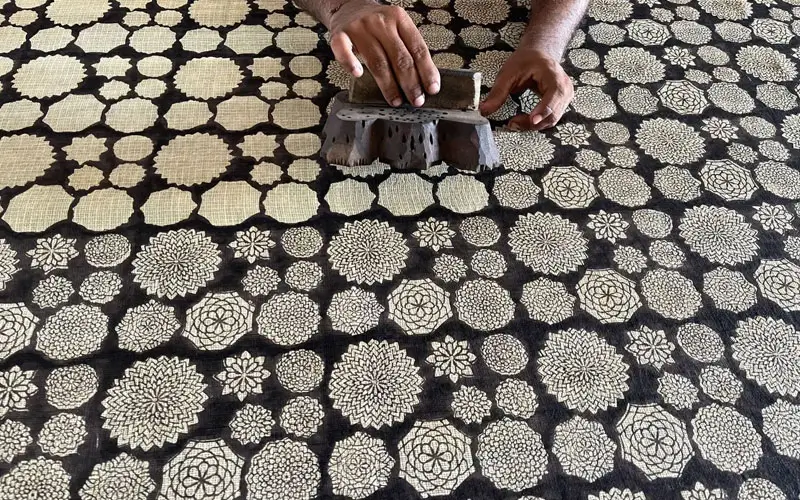
While Blue Pottery represents ceramic mastery, Bagru Print Rajasthan embodies the textile heritage of the region. Originating from the village of Bagru near Jaipur, this craft is rooted in centuries-old hand block printing techniques. Unlike screen printing or machine printing, Bagru printing involves hand-carved wooden blocks dipped in natural dyes and pressed manually onto fabric.
Traditional Bagru prints are characterized by earthy tones such as indigo, rust, black, and beige. The dyes are derived from natural sources including indigo plants, iron filings, and pomegranate peels. The fabric typically undergoes a mud-resist process known as “Dabu printing,” which creates layered patterns and intricate detailing.
Authentic Bagru hand block print fabrics reveal slight irregularities in alignment. These imperfections confirm that the textile was printed manually. Machine prints, in contrast, exhibit perfect repetition and identical impressions.
When you observe a genuine Bagru fabric closely, you can often see variations in dye intensity where the artisan pressed the block with different pressure levels.
Tourists shopping for scarves, table linens, or garments should look for soft cotton texture and breathable fabric quality. Synthetic shine or overly bright chemical colors often indicate industrial production rather than authentic artisan work.
Understanding the visual identity of both crafts enhances appreciation and ensures informed purchases. Blue Pottery Jaipur features glossy ceramic surfaces with cool blue, turquoise, and white tones. Designs often include floral vines, birds, and Mughal-inspired motifs. The aesthetic is refined, symmetrical, and decorative, suited for home décor.
On the other hand, Bagru Print Rajasthan showcases matte textile surfaces with organic patterns and earthy colors. The motifs are repetitive yet rhythmic, influenced by local flora and geometric forms. The tactile experience differs significantly; Blue Pottery feels solid and glazed, whereas Bagru textiles feel soft and breathable.
Foreign tourists often mistake factory-made ceramic souvenirs for authentic Blue Pottery. Similarly, digitally printed fabrics are sometimes sold as Bagru block prints. Careful visual inspection and awareness of material differences prevent such confusion.
Experience the charm of traditional Rajasthani arts through curated cultural tours. Visit local artisan workshops, explore heritage markets, and travel comfortably with expert local assistance.
Authenticity in Jaipur Blue Pottery can be identified through material composition, weight, and glaze quality. Genuine pieces feel slightly heavier due to quartz base composition. When tapped gently, they produce a soft ringing sound rather than a dull thud associated with clay ceramics.
The glaze should appear deep and slightly translucent, allowing brushwork to remain visible beneath the surface. Designs painted by hand often show tiny variations in line thickness and curvature. Uniform mechanical precision usually suggests machine replication.
Another indicator of authenticity is the presence of artisan workshops rather than large-scale factory showrooms. Many reputable sellers in Jaipur allow visitors to observe the crafting process. Purchasing directly from artisan clusters supports local communities and ensures quality.
Travelers on a Golden Triangle Tour India itinerary often include a handicraft shopping experience. Understanding these indicators enhances confidence in selecting genuine pieces.
Recognizing genuine Bagru hand block print requires close observation of fabric texture and printing consistency. Natural dyes tend to produce slightly muted tones compared to synthetic chemical dyes. The fabric may carry a mild earthy scent due to traditional dyeing methods.
Examine the backside of the textile. In authentic hand block prints, the dye penetrates the fabric and may show slight bleed-through. Machine-printed fabrics often display a sharp front-side print with minimal reverse imprint.
Alignment inconsistencies are signs of manual craftsmanship rather than flaws. Each block impression is placed by hand, resulting in subtle irregular spacing that confirms authenticity.
Foreign tourists seeking ethical shopping experiences should prioritize verified artisan outlets and cooperative stores that emphasize Rajasthan textile heritage.
Shopping for handicrafts becomes more meaningful when travelers understand cultural context. Authentic Jaipur handicrafts represent livelihoods for artisan families who pass skills through generations. Purchasing responsibly ensures preservation of these traditions.
Avoid aggressively bargaining in artisan workshops where pricing reflects fair wages and handmade labor. Seek clarity about production processes and request demonstrations whenever possible. Many reputable tour operators include guided handicraft visits that educate travelers about authenticity and fair trade practices.
Understanding the difference between souvenir market replicas and heritage craft pieces enriches the overall Golden Triangle cultural experience.
Blue Pottery is a ceramic craft using quartz base, while Bagru Print is a hand block textile printing tradition.
Look for hand-painted brush strokes, quartz texture, deep glaze, and slight human imperfections.
Traditional Bagru prints use natural dyes derived from plants and minerals.
Hand block printing creates minor irregularities that confirm manual craftsmanship.
Authentic Blue Pottery uses quartz powder instead of conventional clay.
Purchasing from artisan workshops and verified cooperative stores ensures authenticity.
Factory replicas often imitate the design but lack authentic quartz composition and hand painting.
Natural dyes create earthy tones and represent traditional eco-friendly techniques.
Some pieces are decorative, while others are functional but should be handled carefully.
Buying authentic handicrafts directly supports artisan communities and preserves heritage skills.
Fill in the details below. Our expert consultant will respond within 4 hours with a bespoke itinerary crafted just for you — completely free, no obligation.