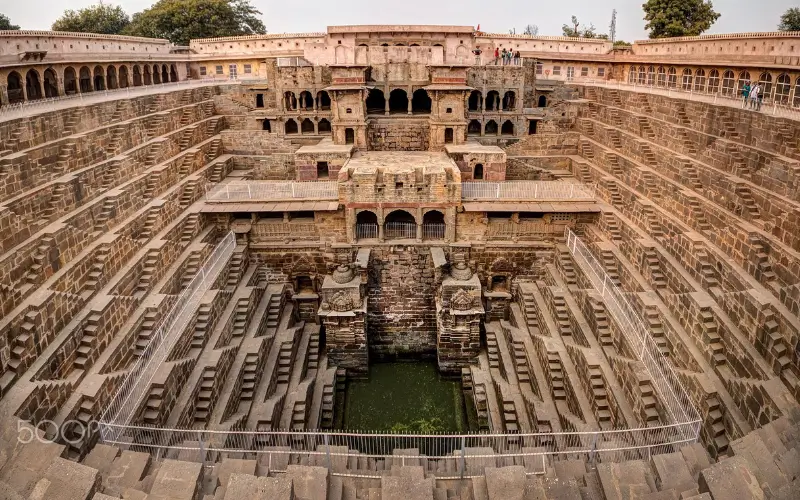
A visit to Chand Baori Stepwell is one of the most fascinating experiences for travelers exploring Rajasthan beyond Jaipur's famous forts and palaces. Located in the quiet village of Abhaneri, approximately 95 km from Jaipur, this remarkable stepwell is regarded as one of the deepest and most architecturally impressive stepwells in India. With more than 3,500 perfectly symmetrical stone steps arranged across thirteen levels, Chand Baori is an engineering masterpiece that continues to amaze architects, historians, photographers, and travelers from around the world.
Many visitors include Chand Baori as a half-day excursion from Jaipur or while traveling between Jaipur and Agra during a Golden Triangle Tour. Since the monument lies close to the highway connecting the two cities, stopping here adds an extraordinary historical experience without significantly increasing travel time. Unlike Rajasthan's royal palaces and forts, Chand Baori offers visitors an opportunity to witness ancient water conservation techniques combined with remarkable architectural precision.
Built more than a thousand years ago, the stepwell served as an essential water reservoir in a region known for its dry climate. Long before modern water supply systems existed, communities relied upon stepwells to collect rainwater, provide drinking water, and create naturally cool gathering spaces during the hot summer months. Even today, standing at the edge of the well and looking down toward the geometric pattern of thousands of stone steps creates a breathtaking first impression.
The drive from Jaipur to Chand Baori Stepwell usually takes around 1.5 to 2 hours by private vehicle, depending on traffic conditions. The highway is well maintained, making the destination suitable for couples, families, photographers, and international visitors looking for a unique historical attraction beyond the city's main sightseeing circuit.
Private taxis remain the most comfortable option for visiting Chand Baori because travelers can combine the excursion with nearby attractions or continue directly toward Agra. Most tour operators also include Chand Baori in customized Golden Triangle Tour Packages, allowing visitors to experience one of Rajasthan's hidden architectural treasures while traveling between destinations.
Jaipur is famous for its magnificent forts, royal palaces, and colourful streets—but some of Rajasthan's most unforgettable experiences lie beyond the city's best-known landmarks.
Planning your visit in advance helps maximize sightseeing time while ensuring a comfortable journey.
Distance from Jaipur
Distance from Agra
Because of its convenient location, many travelers stop at Chand Baori while driving from Agra to Jaipur instead of making a separate day trip.
Opening Hours
Most visitors spend between 45 minutes and 1.5 hours exploring the monument, taking photographs, and learning about its fascinating history.
Approximate Entry Fee
At present, entry to Chand Baori is generally free, although government policies may change in the future. Visitors are advised to verify the latest information before traveling.
Expected Transportation Cost from Jaipur
Private Sedan
Toyota Innova Crysta / SUV
Private Tour Including Driver
Public buses also operate toward Abhaneri from Jaipur, but services are less convenient for international travelers due to limited schedules and additional local transportation requirements after arrival.
Hiring a private vehicle offers the greatest flexibility because travelers can stop at roadside cafés, local villages, or nearby attractions along the route. Air-conditioned vehicles are particularly recommended during warmer months, ensuring a comfortable journey throughout the day.
One important point visitors should know is that entering the stepwell itself is not permitted for safety and conservation reasons. Visitors admire the monument from designated viewing platforms surrounding the structure. Although this may seem limiting initially, the elevated viewpoints actually provide the best perspective for appreciating the remarkable geometric symmetry created by thousands of perfectly aligned steps.
The monument is maintained by the Archaeological Survey of India (ASI), helping preserve its historical significance while ensuring visitor safety. Basic facilities such as parking, small refreshment stalls, and local souvenir vendors are available near the entrance, although carrying drinking water is always recommended.
The surrounding village offers a peaceful atmosphere that contrasts beautifully with Jaipur's busy tourist areas. Visitors often appreciate the slower pace, friendly local community, and authentic rural surroundings, making the excursion feel like a completely different side of Rajasthan beyond its royal palaces and bustling markets.
The remarkable design of Chand Baori Stepwell reflects the engineering brilliance of early India. Historians believe the stepwell was constructed between the 8th and 9th centuries by King Chanda of the Nikumbh Dynasty, long before Jaipur was established as a royal city. During this period, Rajasthan experienced extremely hot summers and limited rainfall, making efficient water storage essential for daily life. Stepwells like Chand Baori were not only practical water reservoirs but also important social gathering places where local communities met, rested, and escaped the intense heat.
What makes Chand Baori unique is its extraordinary symmetry. The stepwell descends approximately 20 metres (around 65 feet) and contains over 3,500 narrow stone steps arranged across 13 levels. From the viewing platform, the geometric pattern appears almost perfectly symmetrical, creating one of the most recognizable architectural scenes in India. Every angle presents a different visual perspective, making it one of Rajasthan's finest destinations for architectural photography.
Unlike ordinary wells, Chand Baori was designed to provide access to water regardless of the changing water level throughout the year. As water levels dropped during dry seasons, visitors simply walked further down the carefully designed staircases. This ingenious system demonstrates how ancient engineers adapted architecture to suit the harsh climatic conditions of Rajasthan.
Adjacent to the stepwell stands the Harshat Mata Temple, dedicated to the Goddess of Happiness and Joy. Although parts of the original temple suffered damage centuries ago, the remaining sculptures, decorative pillars, and carved stonework continue to display remarkable craftsmanship. Many travelers combine visits to both monuments, allowing approximately 20 to 30 minutes to explore the temple before returning to the stepwell.
Photography enthusiasts often consider Chand Baori Stepwell one of the most photogenic monuments in India. The best lighting conditions occur shortly after sunrise and during the late afternoon when sunlight creates dramatic shadows across the thousands of steps. Midday photography is also possible, although the stronger overhead sunlight produces higher contrast.
For the best photographs, visitors should begin at the main viewing platform overlooking the complete stepwell. Wide-angle lenses capture the impressive geometric symmetry, while zoom lenses highlight the intricate carvings and architectural details. Portrait photography also works exceptionally well because the repeating stone patterns create a striking background without distracting from the subject.
Drone photography is not permitted without official authorization from the relevant authorities. Professional photographers planning commercial shoots should obtain any necessary permissions before arriving.
Your Jaipur journey can be more than forts and palaces. Venture towards Abhaneri and discover Chand Baori, one of India's most striking stepwell designs.
The most comfortable period for visiting Chand Baori Stepwell is between October and March, when daytime temperatures are suitable for outdoor sightseeing. Morning visits between 8:00 AM and 10:00 AM are highly recommended because the weather remains pleasant, visitor numbers are lower, and the natural light is excellent for photography.
Although the monument can be visited throughout the year, travelers during the hotter months should carry sufficient drinking water, sunscreen, sunglasses, and a hat. Since most of the sightseeing takes place outdoors, comfortable walking shoes are also advisable.
Many visitors include Chand Baori while traveling from Jaipur to Agra or from Agra to Jaipur as part of a Golden Triangle Tour Package. This arrangement is both practical and time-efficient because the monument lies close to the main highway connecting the two cities.
A popular itinerary begins with an early departure from Jaipur after breakfast. Travelers reach Chand Baori in approximately two hours, spend around one hour exploring the monument, visit the nearby Harshat Mata Temple, enjoy refreshments, and then continue toward Agra. This schedule allows visitors to experience one of Rajasthan's lesser-known historical landmarks without adding an extra travel day to the overall itinerary.
Basic visitor facilities include parking areas, washrooms, small refreshment stalls, and local handicraft vendors near the entrance. Credit card acceptance may be limited in smaller shops, so carrying some cash remains useful for snacks and souvenir purchases.
Visitors should respect all safety barriers surrounding the monument. Entering the stepwell itself is prohibited because of conservation measures designed to protect the historic structure. Staying within designated visitor areas ensures both personal safety and preservation of this important archaeological site.
Nearby attractions can also be added to the excursion if time permits. The Harshat Mata Temple is located within walking distance of the stepwell and provides additional insight into the region's religious history. Travelers continuing toward Agra may also stop at roadside restaurants offering traditional North Indian and Rajasthani cuisine before resuming their journey.
Although Chand Baori Stepwell is less crowded than many of Rajasthan's famous forts and palaces, arriving early remains beneficial for uninterrupted photography and a quieter sightseeing experience. The peaceful surroundings allow visitors to fully appreciate the scale, symmetry, and remarkable engineering of this ancient monument.
For international travelers interested in architecture, history, photography, or cultural heritage, Chand Baori offers a completely different experience from Jaipur's royal palaces. Its geometric beauty, fascinating history, and convenient location make it one of the finest additions to any Golden Triangle Tour itinerary, especially for travelers looking to explore destinations beyond the traditional tourist circuit.
The monument is located approximately 95 km from Jaipur, and the drive usually takes 1.5 to 2 hours.
Entry is generally free, although visitors should verify the latest government regulations before traveling.
The monument is usually open from 8:00 AM to 6:00 PM every day.
Most visitors spend between 45 minutes and 1.5 hours exploring the stepwell and the nearby temple.
No. Entry into the stepwell itself is restricted for safety and conservation purposes.
Historians believe it was constructed by King Chanda of the Nikumbh Dynasty during the 8th–9th century.
Yes. The temple is located adjacent to the stepwell and is commonly visited during the same excursion.
Early morning and late afternoon provide the best natural lighting and fewer visitors.
Yes. The monument is suitable for couples, families, senior travelers, photographers, and history enthusiasts.
Yes. Many private Golden Triangle Tour Packages include Chand Baori while traveling between Jaipur and Agra because it is conveniently located along the route.
Fill in the details below. Our expert consultant will respond within 4 hours with a bespoke itinerary crafted just for you — completely free, no obligation.