Itinerary ideas, cultural insights, luxury tips and practical planning guides for every India traveller.
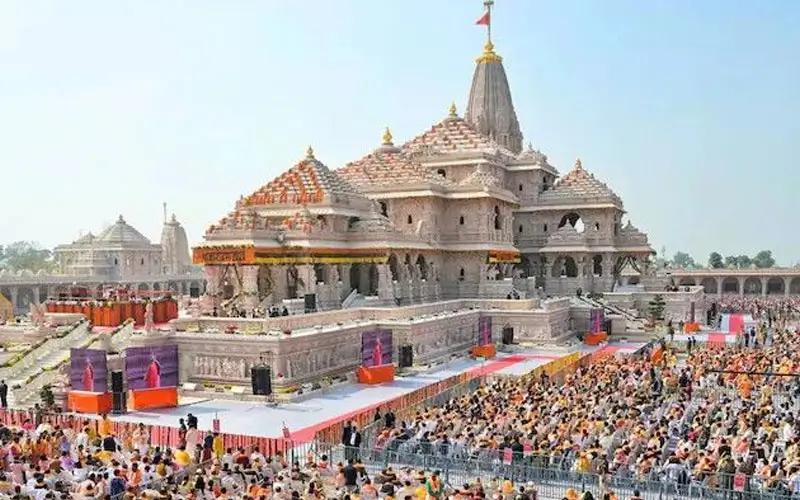
Ayodhya is not merely a destination marked on a map. It is a living memory embedded deeply within Hindu consciousness. For centuries, its name has traveled through scriptures, oral traditions, family stories, and spiritual practice. The Ayodhya Ram Mandir stands today not only as a structure of stone and devotion, but as a symbol shaped by time, belief, and perseverance. For every Hindu planning a visit, especially those living far from India, understanding Ayodhya beyond surface narratives transforms the journey into a deeply personal pilgrimage.
Many visitors arrive with devotion in their hearts but limited awareness of the deeper layers that define Ayodhya’s spiritual gravity. Hidden within its geography, rituals, architectural philosophy, and cultural continuity are facts that rarely find space in casual conversations. These are not secrets meant to be concealed, but truths that reveal themselves slowly to those willing to listen.
A visit to Ayodhya without understanding these layers is like reading a sacred text without knowing its meaning. This detailed exploration uncovers those hidden dimensions, offering context that enriches darshan and deepens spiritual connection.
One of the most misunderstood aspects of Ayodhya is the tendency to view it as a historical site rather than a living tirtha. In Hindu tradition, a tirtha is not defined by monuments alone. It is defined by uninterrupted spiritual energy. Ayodhya has never ceased to function as a spiritual center, regardless of political or social changes.
Daily rituals, temple practices, river worship, and household traditions continued quietly for centuries. The Ayodhya Ram Mandir emerges from this continuity, not as a revival, but as a reaffirmation of an unbroken spiritual presence. This understanding changes how a devotee perceives the visit. It is not about witnessing history, but about entering an ongoing sacred flow.
Discover fascinating hidden facts and deeper insights about the Ram Mandir and Ayodhya’s heritage. Contact us for guided tours, complete travel planning and seamless support throughout your visit!
Ayodhya’s spiritual importance is inseparable from its geography. Ancient texts describe Ayodhya as a city aligned with cosmic order, where earthly space mirrors divine structure. The placement of temples, ghats, and sacred pathways follows principles rooted in vastu and cosmology.
The location of the Ram Janmabhoomi is not random. It aligns with sacred directions, river flow, and energy centers described in ancient Hindu knowledge systems. For devotees, walking through Ayodhya is not merely movement through space. It is a symbolic journey through layers of cosmic design.
Understanding this sacred geography allows visitors to experience Ayodhya not just visually, but energetically.
India is home to countless pilgrimage destinations, each with its own significance. Yet Ayodhya occupies a distinct position. It is not solely associated with worship, penance, or enlightenment. It represents dharma lived through action.
Lord Ram is not worshipped only as a deity, but as Maryada Purushottam, the embodiment of righteous conduct. The Ayodhya Ram Mandir therefore stands as a reminder of ethical living, duty, sacrifice, and balance. This philosophical foundation sets Ayodhya apart from other spiritual destinations.
For Hindu devotees, visiting Ayodhya is not only an act of faith but a reaffirmation of values.
Temple architecture in Hindu tradition is never merely decorative. Every dimension, carving, and alignment carries meaning. The Ayodhya Ram Mandir follows classical Nagara architectural principles, infused with symbolic representation of cosmic order.
The vertical ascent of the structure represents spiritual elevation. The mandapas symbolize stages of human consciousness. The sanctum reflects the heart space where the divine resides within every being.
These elements often go unnoticed by casual visitors. Yet, when understood, they turn darshan into meditation. Each step toward the sanctum becomes a metaphorical journey inward.
Ram bhakti in Ayodhya has never been confined to temples alone. It exists in bhajans sung in households, in daily rituals performed by ordinary families, and in community traditions passed down through generations.
Saints, poets, and devotees sustained this bhakti even during periods when physical structures were absent or restricted. The Ayodhya Ram Mandir thus stands upon centuries of invisible devotion, accumulated through lived faith rather than physical presence alone.
For devotees, acknowledging this continuity deepens reverence beyond physical sight.
For NRIs and global Hindus, Ayodhya often exists as an inherited memory rather than a lived experience. Stories heard from grandparents, verses recited during prayers, and festivals observed abroad create emotional connection without geographic familiarity.
Visiting Ayodhya bridges this gap. It transforms inherited faith into lived understanding. Standing within the sacred geography where Ram’s story unfolds allows global Hindus to reconnect with roots that transcend nationality.
The Ayodhya Ram Mandir thus becomes a spiritual anchor for Hindus living far from India, offering grounding and identity.
Many rituals performed in Ayodhya appear simple on the surface. Lighting a lamp, offering flowers, walking barefoot, or observing silence at certain spots may seem routine. Yet each act holds layered symbolism.
Lighting a lamp represents the awakening of inner awareness. Offering flowers symbolizes surrender of ego. Walking barefoot reflects humility and connection with sacred earth.
Understanding these meanings transforms routine actions into conscious spiritual practices, making the pilgrimage deeply personal.
Explore the spiritual heart of Ayodhya with thoughtfully planned tours, knowledgeable local assistance and comfortable travel arrangements for a peaceful experience.
In Hindu tradition, samskaras are transformative rites that shape one’s inner journey. Visiting Ayodhya is often described as a spiritual samskara, especially for devotees who approach it with understanding.
The experience reshapes perspective. It encourages introspection. It reinforces dharmic values in daily life. This transformation explains why elders often emphasize Ayodhya yatra as an essential spiritual milestone.
The Ayodhya Ram Mandir serves as the focal point of this transformation.
While the Ram Mandir draws attention, Ayodhya’s spiritual fabric extends far beyond its walls. Ghats along the Sarayu River, ancient pathways, and lesser-known shrines collectively form the sacred ecosystem.
Group tours and guided pilgrimages often help devotees understand these connections. Exploring Ayodhya holistically rather than focusing on a single site allows for deeper immersion.
This broader perspective reveals why Ayodhya has sustained its sanctity across millennia.
Devotees often describe darshan in Ayodhya as emotionally overwhelming. Tears flow unexpectedly. Silence feels natural. Time seems suspended.
This reaction is not accidental. It arises from the convergence of faith, memory, and presence. Understanding the hidden dimensions of Ayodhya intensifies this emotional resonance.
For many, the experience becomes a turning point in their spiritual journey.
Hindu pilgrimage is not about obligation, but about alignment. Ayodhya represents the ideal alignment of action, belief, and devotion.
Visiting Ayodhya reconnects devotees with foundational values. It strengthens faith not through instruction, but through experience.
The Ayodhya Ram Mandir stands as an invitation rather than a command, calling devotees to witness dharma embodied.
Ayodhya is believed to be the birthplace of Lord Ram and represents dharma lived through action.
The temple symbolizes centuries of uninterrupted devotion, ethical ideals, and cosmic alignment.
Ayodhya holds cultural, philosophical, and spiritual significance beyond ritual worship.
Ayodhya connects inherited faith with lived experience, strengthening spiritual identity.
Rituals emphasize simplicity, humility, and inner awareness rather than elaborate display.
Yes, with proper planning, Ayodhya is accessible and spiritually fulfilling for seniors.
It transforms darshan from observation into conscious spiritual participation.
Yes, its environment naturally encourages introspection and inner stillness.
Group pilgrimages provide structure, guidance, and deeper contextual understanding.
It reinforces dharmic values, deepens devotion, and offers spiritual grounding.
Fill in the details below. Our expert consultant will respond within 4 hours with a bespoke itinerary crafted just for you — completely free, no obligation.