Itinerary ideas, cultural insights, luxury tips and practical planning guides for every India traveller.
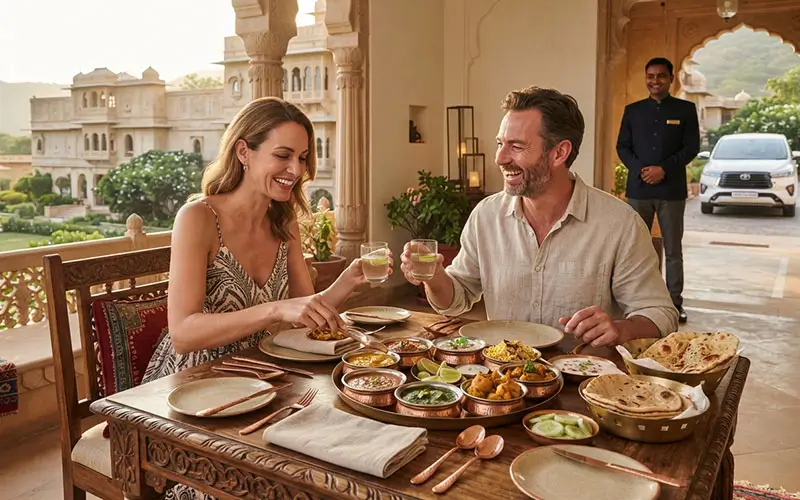
India can be one of the most rewarding destinations for vegetarian travellers because meat-free food is deeply established across the country rather than treated only as a specialist dietary category. Restaurants, hotels and local kitchens serve an enormous variety of dishes based on lentils, vegetables, grains, rice, dairy products, breads, spices and regional ingredients. Vegan travellers can also eat extremely well, although they need to pay closer attention to dairy products such as ghee, butter, paneer, cream, curd and milk.
An India tour with vegetarian meals should provide more than a list of restaurants. Food requirements should be communicated to hotels, guides and relevant service providers throughout the journey so travellers are not forced to explain the same dietary preference from the beginning at every stop.
The requirements become more specific for an India tour with vegan meals. A dish can appear completely plant-based but still contain ghee or butter. Dal may be finished with butter. Vegetable curry may contain cream. Rice can sometimes be cooked with ghee, and bread may be brushed with butter after leaving the tandoor. Desserts frequently contain milk, ghee or other dairy ingredients.
For this reason, vegan travellers should communicate that they avoid all dairy products rather than relying only on the word “vegan,” particularly in smaller establishments where the English dietary term may not be interpreted consistently.
Food allergies require another level of care. Vegetarian, vegan and allergy-safe are not interchangeable terms. A restaurant that serves excellent vegetarian food may still use nuts, dairy, gluten or other allergens extensively in the kitchen. Travellers with serious allergies should provide precise information and follow the medical precautions they normally use at home.
A private food-friendly India tour can make these requirements easier to manage because the traveller has a dedicated vehicle and flexible schedule. The driver and guide can take the guests to suitable restaurants instead of relying on a fixed group meal stop. Hotels can be selected partly according to breakfast and dining quality, and meal timing can be adjusted when the family or couple prefers an earlier or later dinner.
The result is not a restrictive holiday centred on avoiding food. When handled properly, vegetarian or vegan requirements can become a natural part of the trip while still allowing travellers to enjoy India's regional cuisines.
Vegetarian travellers will generally find substantial choice across major Indian tourism destinations. Delhi, Agra, Jaipur, Udaipur, Jodhpur and other frequently visited cities have restaurants serving vegetarian Indian food as well as hotels offering broad breakfast and dinner menus. Many restaurants are completely vegetarian, while others maintain large vegetarian sections alongside meat dishes.
The important point is that vegetarian food in India covers far more than one or two curry options.
North Indian menus can include dal, vegetable preparations, paneer dishes, chickpeas, kidney beans, rice, pulao, tandoori breads and regional specialities. Rajasthan has its own strong culinary identity, including dishes based on lentils, gram flour, grains, spices and locally suitable ingredients. Other regions introduce completely different flavours and preparations.
This diversity means vegetarian travellers do not need to eat the same meal every day.
At hotels, breakfast is usually the easiest meal. Larger properties commonly serve a combination of Indian and international options. Depending on the hotel, guests may find fruit, cereal, toast, eggs for ovo-vegetarians, yoghurt, South Indian dishes, breads, cooked vegetables and other breakfast items.
A strict vegetarian traveller should still ask about preparation when it matters personally. Different people define vegetarian diets differently. Some consume eggs while others do not. Some avoid onion and garlic for religious or personal reasons. Others require food prepared without any contact with meat.
The booking request should therefore state the actual restriction rather than assuming the word “vegetarian” communicates every detail.
A traveller who eats dairy but no meat, fish or eggs should say exactly that. A traveller who eats eggs and dairy can state ovo-lacto vegetarian. Someone requiring Jain-style food should specify restrictions separately because Jain dietary requirements are more specific than general vegetarianism.
A vegetarian India holiday package can communicate these requirements to hotels before arrival, but travellers should still reconfirm important dietary needs when ordering.
Restaurant menus in tourist areas often use a green vegetarian symbol to identify vegetarian packaged or menu items, but guests should not rely on symbols alone if they have strict requirements.
Street food deserves additional thought.
India has an enormous street-food culture, and many famous snacks are vegetarian. However, travellers with sensitive stomachs, allergies or strict hygiene requirements should be selective about where they eat.
High customer turnover, visible food preparation, clean serving practices and freshly cooked hot food are sensible considerations.
A private guide can recommend established food outlets, but no restaurant can guarantee that a traveller will never experience digestive discomfort. Changes in spice, meal timing, climate and unfamiliar ingredients can affect people differently.
Drinking water should also be handled sensibly. Travellers commonly use sealed bottled water or properly filtered water provided by reputable hotels. Bottled-water seals should be intact when purchased.
A private car can keep additional drinking water available during longer road journeys.
Food preferences should also be considered on travel days. A long drive between cities becomes much more comfortable when lunch is taken at a suitable restaurant rather than the first roadside stop available.
With a private vehicle, the lunch break can be chosen according to dietary requirements, cleanliness, location and the day's timing.
Planning an India tour with vegetarian or vegan meals? Enjoy a comfortable and hassle-free holiday with a private car and experienced driver. Explore India's famous destinations while enjoying food options that match your dietary preferences. Share your meal requirements with us, and let us help plan a personalised India tour with vegetarian and vegan-friendly dining arrangements.
Vegan travel requires more communication because dairy products are deeply integrated into many Indian dishes.
Ghee is clarified butter and is commonly used in Indian cooking. Paneer is a fresh dairy cheese. Curd and yoghurt are dairy products. Cream can be added to gravies, and butter may be used both during cooking and as a finishing ingredient.
A traveller booking a vegan tour in India should therefore communicate a clear requirement: no meat, fish, eggs, milk, butter, ghee, paneer, cream, curd or other dairy products.
This wording is more useful than simply saying “vegetarian.”
Many Indian dishes can be prepared without dairy, but the kitchen needs to know before cooking.
Dal is a good example. Lentils themselves are plant-based, but a restaurant may finish the dish with butter or ghee. Asking for dal cooked with vegetable oil and without butter or ghee can make the requirement clearer.
Vegetable curries can also vary. Some use tomato, onion, spices and vegetable oil, while others contain cream, yoghurt or cashew-based sauces. The appearance of the dish does not reliably reveal the ingredients.
Breads require similar attention.
Plain roti or chapati can often be prepared without dairy, but butter may be applied after cooking. Naan recipes may contain yoghurt, milk, butter or other dairy ingredients depending on the kitchen.
A vegan traveller should ask specifically rather than assuming every bread is plant-based.
Rice is often straightforward, particularly plain steamed rice, but richer pulao or biryani preparations may use ghee.
Desserts are one of the more difficult categories because many traditional Indian sweets contain milk, condensed milk, ghee or other dairy ingredients. Fresh fruit can be the simplest vegan dessert when the restaurant does not have a clearly suitable option.
A vegan-friendly private India tour can reduce repetitive communication by informing hotels before check-in.
For example, the booking notes can request vegan breakfast options and specify that dairy products should not be used in prepared dishes for the guest. The guide can then reconfirm the requirement before a restaurant meal.
Luxury and premium hotels may have chefs familiar with international dietary terminology, but travellers should still explain the restrictions clearly.
Smaller local restaurants may produce excellent plant-based food without routinely using the word “vegan.” In those cases, ingredient-based communication works better than terminology.
This is particularly relevant outside major tourist centres.
Travellers should also distinguish vegan food from vegan lifestyle requirements.
A guest may avoid only animal-derived food, while another may also wish to avoid leather products, animal entertainment and toiletries containing animal-derived ingredients. A tour provider needs to know if those broader requirements are important because they affect more than restaurant selection.
The same principle applies to honey. Some vegan travellers avoid it completely, so this should be stated if relevant.
Plant-based milk can be available at many premium hotels and cafés in larger cities, but it should not be assumed everywhere. Travellers who require oat, soy or almond milk every morning should ask the hotel before arrival.
For coffee drinkers, this can be an important small detail over a two-week journey.
Hotel selection can make a significant difference to a food-focused private trip.
A hotel may have beautiful rooms but a very limited breakfast for a strict vegan guest. Another property may have chefs accustomed to dietary requests and be able to prepare suitable meals with advance notice.
A vegetarian-friendly hotel in India does not necessarily need to be an exclusively vegetarian property. The key requirement is whether the kitchen can reliably provide enough suitable choices for the guest.
For vegan travellers, breakfast should be discussed in greater detail.
Fresh fruit, toast without butter, selected cereals, cooked vegetables, potatoes, suitable South Indian dishes and other plant-based options may be possible. Plant milk and dairy-free spreads depend on the hotel.
If the guest needs a packed breakfast for an early departure, the hotel should know the dietary restriction the evening before.
This becomes particularly important for sunrise sightseeing.
A traveller leaving the hotel before the regular breakfast service may receive a packed box containing sandwiches, pastries, yoghurt and boiled eggs unless the dietary request has been communicated clearly.
A vegan breakfast box needs different contents.
Private dining can also be arranged at selected hotels.
Couples may want a romantic dinner, while families may prefer a quiet table after a long sightseeing day. The dietary requirement should be sent to the kitchen before a fixed menu is prepared.
A private vegetarian dinner in India can include several courses without relying entirely on paneer. Guests who want regional dishes should say so rather than receiving a generic hotel menu.
Vegan private dining may require more chef involvement, but good kitchens can often adapt suitable dishes.
Restaurant selection outside hotels should balance authenticity, hygiene, dietary suitability and location.
Driving forty-five minutes across a congested city for one restaurant is not always sensible if another suitable restaurant is near the sightseeing route.
The guide can coordinate meal stops with the day's activities.
A family with children may prefer lunch around 12:30 PM or 1:00 PM, while another traveller may eat later. Private touring provides the flexibility to set meal times around the guests rather than a coach schedule.
Travellers should still avoid excessively ambitious food schedules.
A heavy breakfast, large lunch, food walk and elaborate dinner on the same day may sound attractive on paper but can become uncomfortable.
Indian cuisine can be rich, and travellers may prefer lighter meals between larger culinary experiences.
Spice level is another area where communication matters.
“Vegetarian” does not mean mild. Some vegetarian dishes can be extremely spicy.
Guests who prefer low spice should request mild vegetarian food or explain that they want significantly less chilli. The kitchen may still use aromatic spices, which are different from chilli heat.
Children often benefit from simpler options such as rice, dal, potatoes, breads or less spicy vegetable dishes.
Hotels can sometimes prepare pasta, sandwiches or other familiar foods when children want a break from Indian cuisine.
A good food-friendly trip does not force every meal to become a culinary challenge.
Dietary preferences and medical allergies must be treated differently.
A traveller who chooses not to eat peanuts has a different level of risk from someone with a severe peanut allergy. The second traveller requires explicit communication about ingredients and cross-contact.
An India tour with food allergy support can communicate the allergy to hotels and guides, but no tour operator should guarantee an allergen-free kitchen unless the food provider itself has suitable controlled facilities and explicitly gives that assurance.
Indian kitchens can use nuts, dairy, wheat, sesame and other common allergens.
Cashews may be blended into gravies. Peanuts are common in some regional cuisines. Wheat is widely used for breads. Dairy appears in numerous dishes.
Cross-contact can occur where the same utensils, cooking surfaces or oil are used for different foods.
Travellers with severe allergies should carry prescribed emergency medication and follow medical advice received from their healthcare professional.
An allergy card describing the exact allergen can also be useful.
The information should avoid vague wording.
Instead of “nut allergy,” specify the exact nuts involved if medically appropriate. Instead of “dairy problem,” distinguish between a milk allergy and lactose intolerance because the risks are different.
Jain food requires separate communication.
Many Jain travellers avoid root vegetables such as onion, garlic and potatoes in addition to following vegetarian restrictions. Individual practice can vary, and requirements may be stricter during particular religious periods.
A Jain food tour in India should therefore record the guest's actual requirements rather than relying on a general label.
Major hotels in cities such as Delhi, Agra and Jaipur may be familiar with Jain meal requests, especially when informed in advance.
Restaurant kitchens should still receive the requirement before food is prepared.
Gluten-free travel also requires care.
Rice-based dishes may be naturally free from wheat ingredients, but cross-contact can occur in kitchens. Sauces, packaged seasonings and fried items may contain unexpected ingredients.
Someone with coeliac disease requires a much higher level of caution than someone who simply prefers to reduce wheat consumption.
Again, the exact medical requirement should be communicated.
A private India tour for special dietary needs is useful because meal stops can be changed when a restaurant cannot meet the requirement. The guide is not forced to keep the traveller at a predetermined group restaurant.
The same flexibility helps during long drives.
If the preferred lunch restaurant is unexpectedly closed, the driver and guide can identify another suitable option rather than leaving the traveller without food.
Carrying packaged snacks is sensible for strict diets.
Protein bars, crackers, nuts where medically appropriate, dried fruit or other familiar foods can be useful during long road sectors and early departures.
International travellers should check Indian customs rules before bringing significant quantities of food products into the country.
Discover India's rich culture, beautiful destinations and delicious vegetarian cuisine without worrying about your food preferences. We help international travellers, couples and families plan private India tours with comfortable transportation and vegetarian or vegan-friendly meal options.
Vegetarian food does not automatically make an India trip cheaper.
A vegetarian dish may cost less than a meat dish in some restaurants, but the overall tour cost is driven primarily by hotels, private transport, guides, route and accommodation category.
A private vegetarian India tour package for two travellers using comfortable hotels and a dedicated vehicle can broadly begin around ₹15,000–₹25,000 per day for the travelling party, depending on the route and services included.
A stronger four-star or premium arrangement can move towards ₹25,000–₹40,000+ per day.
Five-star hotels, an Innova Crysta, private guides and higher-end dining can bring the cost to ₹40,000–₹70,000+ per day for two travellers.
Luxury accommodation and premium private dining can raise the total substantially beyond this range.
These figures are broad ground-budget guidance rather than fixed quotations.
Meal prices themselves vary widely.
A simple vegetarian meal at a clean local restaurant can cost a few hundred rupees per person. A good mid-range restaurant meal may cost approximately ₹800–₹1,500 per person, depending on dishes and drinks.
Premium hotel restaurants can easily cost ₹2,000–₹5,000+ per person, particularly for multi-course dining.
Luxury private dinners can be considerably more expensive because the price may include the venue, setup and dedicated service rather than only the food.
Vegan meals do not necessarily carry a surcharge.
A restaurant can often prepare suitable vegetable, lentil and rice dishes from its existing menu. Additional cost may arise when a hotel sources special ingredients such as imported plant milk or creates a customised private menu.
Travellers should not assume that an expensive hotel automatically provides better vegan food than a good local restaurant.
The quality depends on the kitchen and communication.
A food-friendly tour quotation should clearly state which meals are included.
“Breakfast included” means something different from half-board or full-board. If lunch and dinner are excluded, the traveller should know approximately what restaurant budget to keep.
Private guides and drivers normally pay for their own meals unless the quotation states otherwise.
For families, meal costs should account for children separately because hotel buffet pricing can vary according to age.
The most valuable part of a private vegan or vegetarian tour in India is not a promise that every restaurant will produce an enormous specialist menu. It is the ability to communicate dietary needs clearly, select appropriate meal stops and change arrangements when necessary.
That flexibility allows the traveller to enjoy Delhi, Agra, Jaipur, Rajasthan and other parts of India without spending each day worrying about where the next suitable meal will come from.
Yes. Vegetarian food is widely available across India, and many restaurants offer extensive meat-free menus. Travellers should still explain whether they eat eggs, dairy products, onion or garlic because vegetarian requirements can differ from person to person.
Vegan food is available, particularly when requirements are explained clearly. The main issue is hidden dairy such as ghee, butter, paneer, cream and curd. Ask for food without all dairy products rather than relying only on the word vegan.
Many good hotels can prepare suitable vegan breakfast options when informed in advance. Fruit, selected breads, vegetables and certain Indian breakfast dishes may be available. Plant-based milk should be requested before arrival if it is important.
No. Many vegetarian dishes contain paneer, butter, ghee, yoghurt, milk or cream. Vegetarian and vegan are different dietary categories, so vegan travellers need to ask specifically about dairy ingredients.
Yes, Jain meals can be arranged at many hotels and suitable restaurants, particularly when requested in advance. Travellers should provide their exact restrictions because individual Jain dietary practices can vary.
Hotels and restaurants can be informed about allergies, but an entirely allergen-free kitchen cannot be assumed. Travellers with serious allergies should communicate exact requirements, carry prescribed medication and follow their normal medical precautions.
A simple restaurant meal may cost a few hundred rupees per person, while good mid-range dining can be around ₹800–₹1,500 per person. Premium hotel restaurants can cost ₹2,000–₹5,000 or more per person.
Yes. A private car and driver in India provides flexibility to stop at suitable restaurants along the route. Meal stops should still be selected according to the day's distance, road conditions and available restaurant options.
Yes. Hotels and restaurants can usually prepare less spicy dishes when asked. Rice, dal, breads, potatoes and simple vegetable dishes can be suitable options, while larger hotels may also provide familiar international foods.
Provide whether you are vegetarian, vegan, Jain or following another diet, and list any allergies separately. State whether you eat eggs, dairy, onion, garlic or honey where relevant, and identify any serious food allergies or cross-contact concerns clearly before the trip.
Fill in the details below. Our expert consultant will respond within 4 hours with a bespoke itinerary crafted just for you — completely free, no obligation.