Many travellers visiting Agra focus almost entirely on the Taj Mahal and Agra Fort, often overlooking one of the city's finest Mughal monuments—Itimad-ud-Daulah, popularly known as the Baby Taj. Although smaller than the Taj Mahal, this elegant mausoleum played a significant role in the evolution of Mughal architecture and is widely regarded as the architectural inspiration for the Taj Mahal itself.
Located on the eastern bank of the Yamuna River, Itimad-ud-Daulah offers a peaceful atmosphere that contrasts sharply with the large crowds found at Agra's more famous attractions. Visitors can admire intricate marble carvings, delicate stone inlay work, beautifully landscaped gardens, and impressive Mughal design without the long queues often associated with the Taj Mahal.
Commissioned by Nur Jahan, the influential wife of Emperor Jahangir, the monument was built in memory of her father, Mirza Ghiyas Beg, who received the royal title Itimad-ud-Daulah, meaning "Pillar of the State." Construction began in 1622 and was completed around 1628, making it one of the earliest Mughal monuments built almost entirely from white marble.
For travellers following a Golden Triangle Tour, Baby Taj is an excellent addition to a full day of sightseeing in Agra. Since it is located only a short distance from both the Taj Mahal and Agra Fort, the monument can easily be included in the same itinerary without requiring significant additional travel time.
Apart from its historical importance, Itimad-ud-Daulah is highly appreciated by photographers. The absence of heavy crowds, beautifully maintained gardens, symmetrical pathways, decorative towers, and detailed marble artwork create countless opportunities for memorable photographs throughout the day.
Unlike many large monuments that require several hours to visit, Baby Taj can generally be explored comfortably within one to two hours. This makes it an ideal stop for travellers with limited time while still offering one of the finest examples of early Mughal architecture in India.
The Archaeological Survey of India manages the monument, and visitors are required to purchase an entry ticket.
The expected ticket prices for 2027 are approximately:
| Visitor Category | Expected Entry Fee |
| Indian Citizens | ₹35–₹50 |
| Foreign Visitors | ₹300–₹350 |
| Children below the applicable age limit | Free (as per ASI regulations) |
Online ticket booking is available and can help reduce waiting time during busy holiday periods.
As ticket prices may change periodically, checking the latest rates before your visit is advisable.
Itimad-ud-Daulah is generally open every day of the week.
Opening Time: 6:00 AM
Closing Time: 6:00 PM
The last entry is usually permitted shortly before closing time, although arriving at least one hour earlier allows sufficient time to appreciate the monument without rushing.
Early morning and late afternoon are considered the most comfortable times for sightseeing and photography.
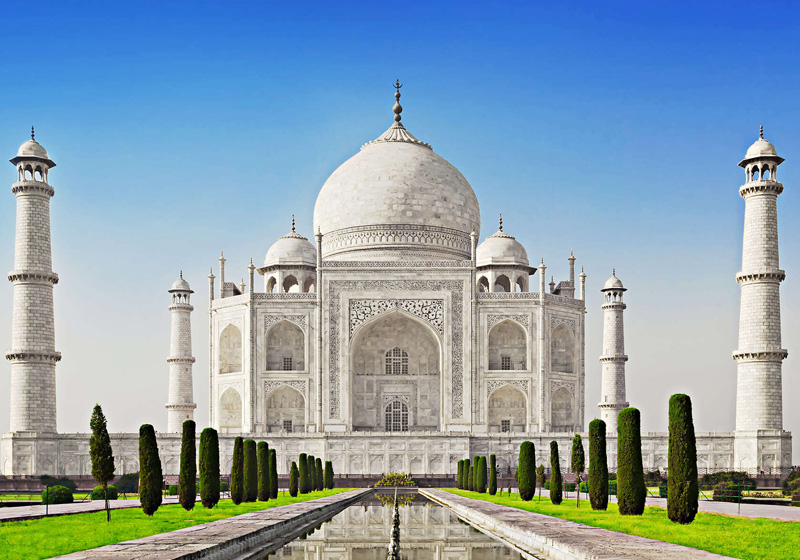
The Taj Mahal may be Agra's most famous landmark, but places like Itimad-ud-Daulah, Agra Fort and Mehtab Bagh reveal a deeper side of the city's Mughal heritage.
The story of Itimad-ud-Daulah begins with Mirza Ghiyas Beg, a Persian nobleman who rose to become one of the most respected officials in Emperor Jahangir's court. His daughter, Nur Jahan, became one of the most powerful women in Mughal history after marrying the emperor.
Following her father's death in 1622, Nur Jahan commissioned this magnificent mausoleum to honour his memory. Rather than constructing another red sandstone monument like many earlier Mughal buildings, she chose white marble decorated with semi-precious stone inlay work. This decision marked a major shift in Mughal architectural design and later influenced the construction of the Taj Mahal.
Many architectural historians describe Baby Taj as the direct predecessor of the Taj Mahal because several decorative techniques first appeared here before being perfected during Shah Jahan's reign.
The nickname "Baby Taj" comes from the monument's visual resemblance to the Taj Mahal.
Both monuments feature white marble construction, symmetrical Mughal gardens, finely carved marble screens, decorative towers at each corner, and intricate Pietra Dura stone inlay work using colourful semi-precious stones.
However, Baby Taj is not a smaller copy of the Taj Mahal. Instead, it was built more than twenty years earlier and actually inspired many architectural elements that later appeared in India's most famous monument.
Because of these similarities, visitors often include both monuments in their Agra itinerary to better understand the evolution of Mughal architecture.
One of the most remarkable aspects of Itimad-ud-Daulah is the extraordinary level of craftsmanship visible throughout the monument.
Unlike earlier Mughal tombs that relied heavily on red sandstone, Baby Taj introduced extensive use of white marble combined with coloured stone inlay, delicate floral patterns, geometric designs, carved marble lattice screens, and beautifully decorated ceilings.
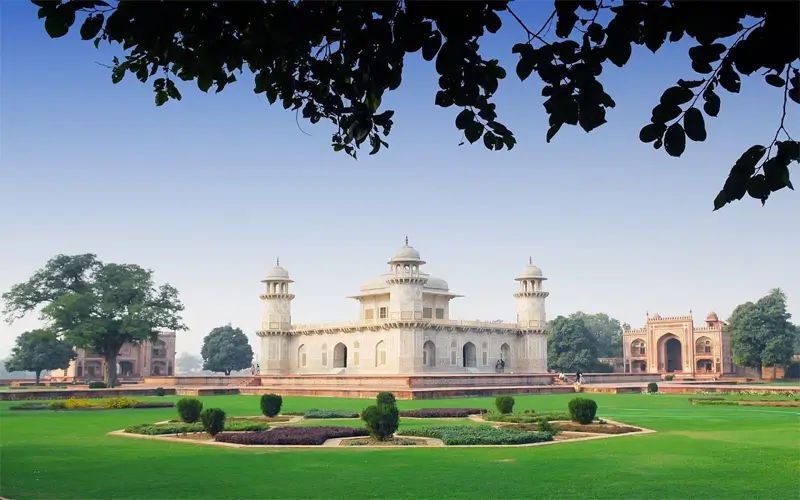
The central mausoleum stands within a perfectly symmetrical Persian-style garden divided by water channels and walking paths. Four elegant octagonal towers rise from each corner, creating a balanced appearance from every direction.
The walls display intricate floral motifs created using jasper, lapis lazuli, onyx, topaz, and other semi-precious stones. Many visitors are surprised by how well these delicate artworks have survived after nearly four centuries.
Although Itimad-ud-Daulah is smaller than the Taj Mahal, every section of the monument showcases remarkable attention to detail. Rather than overwhelming visitors with its size, Baby Taj impresses through the precision of its craftsmanship. Every wall, window, ceiling, and decorative panel reflects the artistic excellence of Mughal architects during the early seventeenth century.
The central mausoleum contains the cenotaphs of Mirza Ghiyas Beg (Itimad-ud-Daulah) and his wife, while the actual graves lie in a lower chamber beneath the main structure, following traditional Mughal architectural practice. Soft natural light enters through delicately carved marble lattice screens, creating beautiful patterns across the marble floors throughout the day.
Walking slowly around the monument allows visitors to appreciate the balance and symmetry of the design. Unlike many crowded tourist attractions, the peaceful surroundings make it easy to pause and admire the fine carvings without interruption.
One of the monument's greatest architectural achievements is its extensive use of Pietra Dura, a decorative technique that involves embedding semi-precious stones into white marble to create intricate floral and geometric patterns.
Long before the Taj Mahal became famous for this artwork, Itimad-ud-Daulah demonstrated how elegant this technique could be. Skilled craftsmen carefully cut stones such as jasper, onyx, lapis lazuli, topaz, carnelian, and agate before fitting them precisely into carved marble surfaces.
Many floral motifs remain remarkably well preserved despite being nearly four hundred years old. Visitors standing close to the walls often notice details that are difficult to appreciate from a distance, making it worthwhile to spend time observing the decorative panels carefully.
Historians frequently describe Baby Taj as the experimental masterpiece that introduced decorative techniques later perfected during the construction of the Taj Mahal.
The mausoleum is surrounded by a traditional Charbagh, or four-part Persian-style garden, divided by stone pathways and water channels.
Well-maintained lawns, flowering plants, mature trees, and symmetrical landscaping create a calm atmosphere that encourages visitors to spend time relaxing after exploring the monument. The gardens are considerably quieter than those surrounding the Taj Mahal, making them particularly attractive for travellers who prefer a peaceful sightseeing experience.
Benches positioned throughout the complex provide opportunities to sit and appreciate the monument from different angles while enjoying the gentle surroundings.
The rear section of the monument overlooks the Yamuna River, offering pleasant views that add another dimension to the visit.
Although the river has changed significantly over the centuries, it still provides an attractive backdrop for photography, particularly during the early morning and late afternoon when sunlight reflects softly across the marble structure.
Many photographers walk around the monument several times because each side offers a different perspective depending on the changing light.
The ideal period for visiting Itimad-ud-Daulah is between October and March, when Agra experiences pleasant weather suitable for sightseeing.
Morning visits shortly after opening provide a peaceful atmosphere with fewer visitors and soft natural light that highlights the white marble beautifully. The late afternoon is equally popular because the warmer golden light enhances the colours of the marble and surrounding gardens.
Travellers visiting during the summer months from April to June should arrive early in the morning, as temperatures frequently exceed 40°C during the afternoon.
The monsoon season between July and September brings greener gardens and fewer tourists, although occasional rainfall may temporarily interrupt sightseeing.
Baby Taj is widely regarded as one of Agra's finest photography locations because visitors have greater freedom to compose photographs without large crowds blocking important viewpoints.
The entrance pathway leading towards the central mausoleum provides an excellent symmetrical composition, while the marble lattice windows and colourful inlay work create beautiful close-up images.
Photographers interested in architectural details should carry a zoom lens to capture intricate carvings that may not be immediately visible to the naked eye.
Early morning light produces soft shadows across the marble, while the final hour before sunset offers warm golden tones that complement the monument's white stone.
Drone photography is not permitted within the protected monument area.
Visiting Delhi, Agra and Jaipur? Make the most of your Agra day by adding Baby Taj alongside the Taj Mahal, Agra Fort and other historic landmarks.
Baby Taj is located approximately 4 kilometres from the Taj Mahal and around 3 kilometres from Agra Fort, making it easy to include within the same sightseeing itinerary.
Approximate travel times include:
Visitors can reach the monument by app-based taxi, auto-rickshaw, private cab, or organised sightseeing tours. Since parking facilities are available near the entrance, private vehicles can also be used.
Most travellers combine Itimad-ud-Daulah with several nearby attractions during a full day of sightseeing in Agra.
Popular places to visit include:
Visiting these attractions together provides a deeper understanding of Mughal history while reducing travel time between monuments.
Although Baby Taj is less crowded than the Taj Mahal, arriving early still offers the best experience. Comfortable walking shoes are recommended because visitors spend time exploring both the gardens and the monument.
Carry drinking water during warmer months and protect yourself from the sun with sunglasses, sunscreen, and a hat if visiting during the afternoon.
Photography enthusiasts should allocate at least 90 minutes to fully appreciate the changing perspectives around the monument. Visitors interested in Mughal architecture often spend additional time examining the marble carvings and decorative inlay work.
Keep your entry ticket until you leave the monument, follow instructions from Archaeological Survey of India staff, and avoid touching the delicate marble surfaces to help preserve the artwork for future generations.
It is famous for being the first Mughal mausoleum built almost entirely from white marble and for inspiring many architectural features later seen in the Taj Mahal.
The monument is popularly known as the Baby Taj because of its white marble construction, elegant symmetry, and decorative stone inlay work that closely resembles the Taj Mahal.
The monument is generally open daily from 6:00 AM to 6:00 PM.
Expected admission is approximately ₹35–₹50 for Indian visitors and ₹300–₹350 for foreign visitors, subject to official revisions.
Most visitors require 1 to 2 hours to comfortably explore the monument and gardens.
Yes. It is one of Agra's finest Mughal monuments and offers outstanding architecture with significantly fewer crowds than the Taj Mahal.
Yes. Photography is generally permitted in outdoor areas, although visitors should follow any site-specific restrictions.
The distance is approximately 4 kilometres, and the journey usually takes 10 to 15 minutes by road.
Pietra Dura is a decorative technique in which colourful semi-precious stones are carefully inlaid into white marble to create intricate floral and geometric designs.
Both monuments are historically important. The Taj Mahal is larger and more famous, while Baby Taj offers a quieter atmosphere and showcases the architectural techniques that influenced the Taj Mahal.
The most comfortable months for sightseeing are October to March, when Agra experiences pleasant weather.
Yes. Many Golden Triangle Tour itineraries include Itimad-ud-Daulah alongside the Taj Mahal, Agra Fort, and other important attractions in Agra.
Fill in the details below. Our expert consultant will respond within 4 hours with a bespoke itinerary crafted just for you — completely free, no obligation.