Itinerary ideas, cultural insights, luxury tips and practical planning guides for every India traveller.
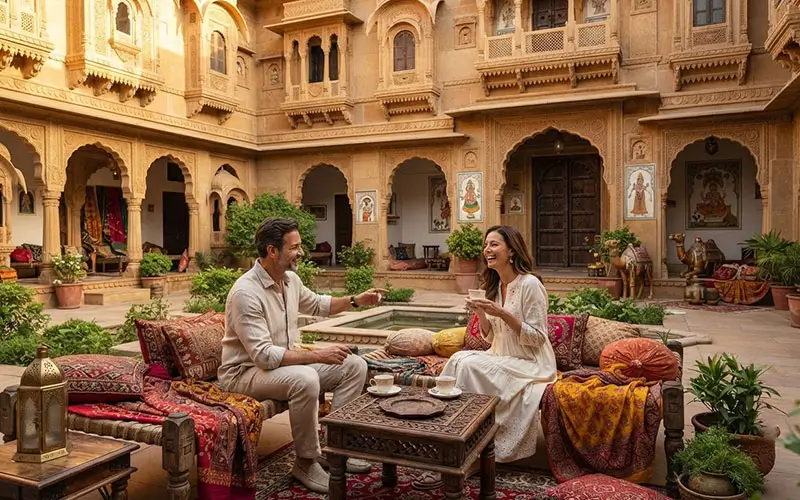
Rajasthan is filled with historic buildings that have been converted into guest accommodation, giving travellers an alternative to conventional chain hotels. Old merchant residences, noble family homes, courtyard properties, restored mansions and palace-style buildings can now operate as boutique hotels while retaining architectural features associated with their original character.
A private heritage haveli stay in Rajasthan can therefore add a completely different dimension to a road journey through Jaipur, Jodhpur, Udaipur, Jaisalmer and smaller historic towns. Instead of returning every evening to a hotel that could exist in almost any major city, guests stay in buildings with courtyards, carved doors, decorative windows, terraces, traditional furniture, old photographs and individually designed rooms.
That character comes with an important practical point: heritage accommodation is rarely as standardised as a modern business hotel.
Two rooms sold under the same category may not have identical dimensions. One room may have a balcony while another faces an internal courtyard. A beautifully restored property may have narrow staircases, limited elevator access or bathrooms adapted within an older structure. A room that looks exceptionally atmospheric in photographs may not suit a guest who needs step-free access.
For that reason, a Rajasthan tour with boutique haveli accommodation should match properties to the traveller rather than simply booking hotels because they contain the word “heritage” in their name.
A couple may value romantic courtyards and rooftop dining. A photographer may want architectural character and strong natural light. A family may care more about room size, connecting-room possibilities and swimming pools. Senior travellers may require elevators, walk-in showers and rooms close to reception.
Private road transport works particularly well with this style of accommodation because heritage properties are spread across both major cities and smaller destinations. A chauffeur-driven vehicle allows travellers to combine famous Rajasthan centres with selected heritage stops without depending on fixed train schedules.
The result can feel more personal than a conventional hotel-based circuit, provided the route remains comfortable and the accommodation has been chosen for genuine suitability rather than appearance alone.
The word “haveli” traditionally refers to a mansion or substantial residence, often built around one or more courtyards and associated historically with wealthy merchants, nobles or prominent local families. Rajasthan contains many such buildings, although their architecture, scale and history vary greatly between regions.
Today, the term is also used commercially by hotels.
That means travellers should not assume every property marketed as a haveli is an untouched historic mansion operating exactly as it did centuries ago. Some are carefully restored historic residences, some have been significantly adapted for hospitality, and others are modern properties designed with heritage-style architecture.
A good boutique haveli hotel in Rajasthan should therefore be evaluated on the actual property rather than its name.
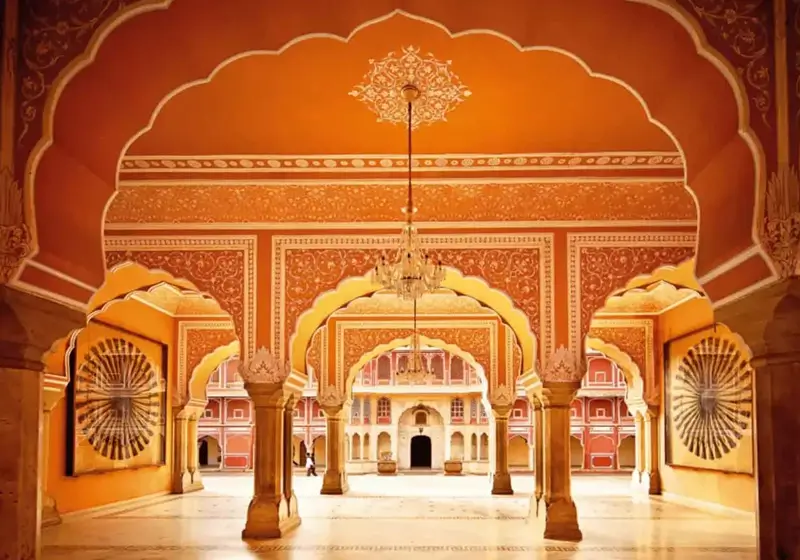
Authentic architectural character can appear in many forms. Guests may find internal courtyards, jharokha-style windows, carved stone or wooden details, painted walls, old family portraits, terraces and individually furnished rooms. In some properties, the current owners or their families may still be closely involved with the hotel.
That personal scale can be one of the main attractions.
Breakfast may be served in a courtyard rather than a large buffet hall. Reception may occupy part of the original residence. Staff may know guests by name because the property contains only a modest number of rooms.
The experience can feel very different from a 300-room international hotel.
Room individuality, however, means photographs should be interpreted carefully.
A hotel website may show several beautiful rooms, but the traveller should verify which category is actually being booked. The least expensive room may not contain the balcony, bathtub or decorative features visible in promotional images of a premium suite.
When room character matters, request the exact category.
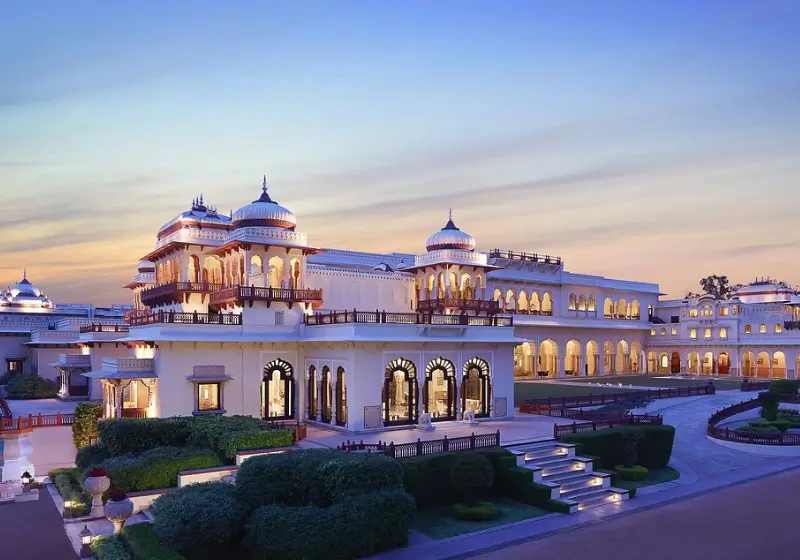
A luxury heritage haveli stay in Rajasthan can also differ significantly from a smaller boutique property. At the premium end, restored palace and haveli-style hotels may provide extensive grounds, swimming pools, fine dining, spas and highly polished service while retaining historic architecture.
Smaller havelis may offer fewer facilities but greater intimacy.
Neither category is automatically superior.
A traveller spending most of the day sightseeing may prefer a centrally located boutique haveli with a charming courtyard. Someone celebrating an anniversary may value a larger heritage property where the hotel itself is an important part of the holiday.
Noise should also be considered.
Historic buildings were not necessarily constructed with modern acoustic insulation. Courtyard architecture can carry sound, and rooms facing active streets may hear traffic or neighbourhood activity.
Light sleepers can request quieter rooms, although exact placement remains subject to the property's layout.
Bathrooms vary as well.
Some restored hotels contain completely modern bathrooms, while others have compact facilities because designers worked within the constraints of the original building.
Travellers who require a walk-in shower, bathtub or particular accessibility feature should ask specifically rather than assuming.
Wi-Fi and air conditioning should also be checked when important.
Many quality heritage hotels provide both, but thick historic walls and irregular building layouts can affect wireless coverage. Air-conditioning systems can differ between properties and room categories.
The attraction of a haveli stay lies partly in accepting some individuality, but travellers should still receive the basic comfort level they paid for.
Discover the royal charm of Rajasthan with a private heritage haveli stay. Enjoy traditional Rajasthani hospitality, beautiful architecture, personalised services and authentic cultural experiences. Let us plan your Rajasthan private tour with handpicked heritage havelis, comfortable private car and experienced local drivers.
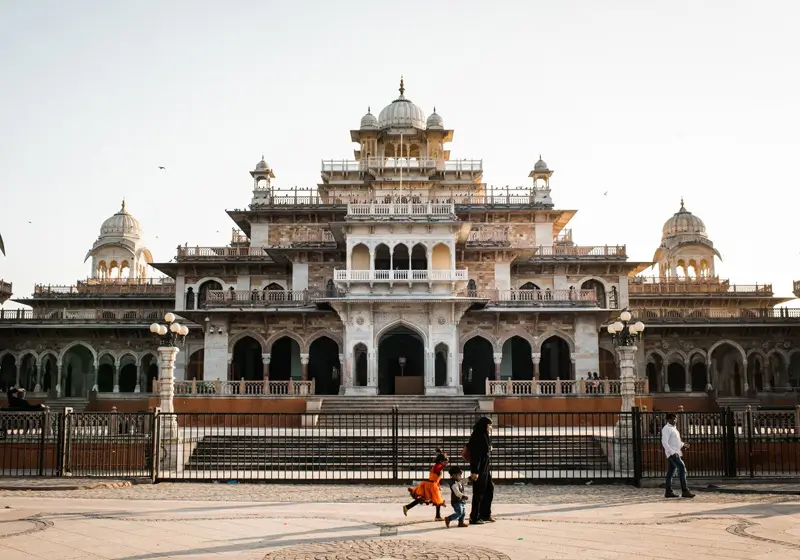
Jaipur is an easy place to incorporate heritage accommodation because the city offers a broad range of historic, boutique and palace-style hotels.
A heritage haveli stay in Jaipur can work well for travellers who want traditional architectural character while retaining access to the city's major attractions, restaurants and shopping.
Location deserves careful attention.
A property inside or close to the older parts of Jaipur may provide atmosphere and easier access to certain markets, but road congestion can affect vehicle movement. A heritage property in a quieter residential area may provide more peaceful nights but require longer drives to some attractions.
Travellers should choose according to the balance they want.
Jaipur stays commonly form part of a larger private Rajasthan journey, making two or three nights useful for many visitors. The city contains enough sightseeing, shopping and dining to justify more than a rushed overnight stop.
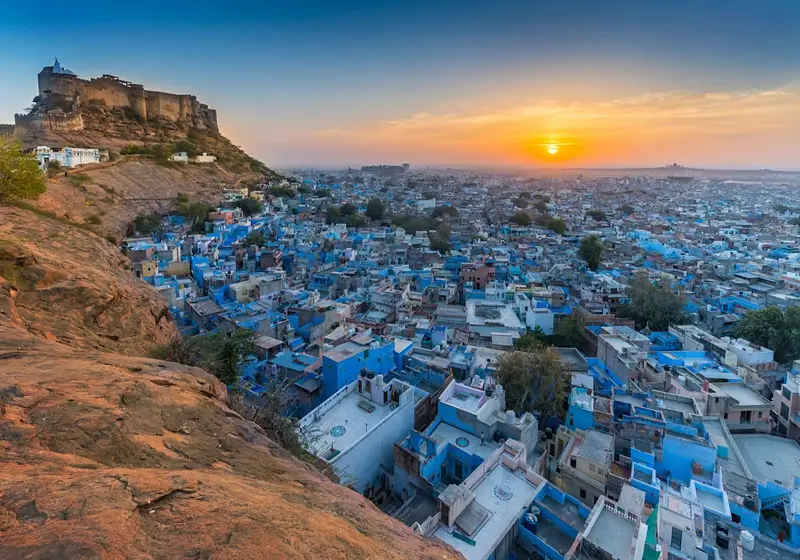
Jodhpur provides another strong setting for boutique heritage accommodation in Rajasthan.
Historic neighbourhoods around the old city can offer atmospheric properties with terraces and views towards Mehrangarh Fort. The visual impact can be exceptional, particularly in the evening.
Access, however, can be different from a modern roadside hotel.
Some old-city lanes are narrow. A large tour vehicle may not always be able to stop directly at a heritage property's entrance. Guests may need to transfer luggage over a short distance using hotel assistance or a smaller local vehicle.
This should be checked before arrival, particularly for senior travellers or guests with substantial luggage.
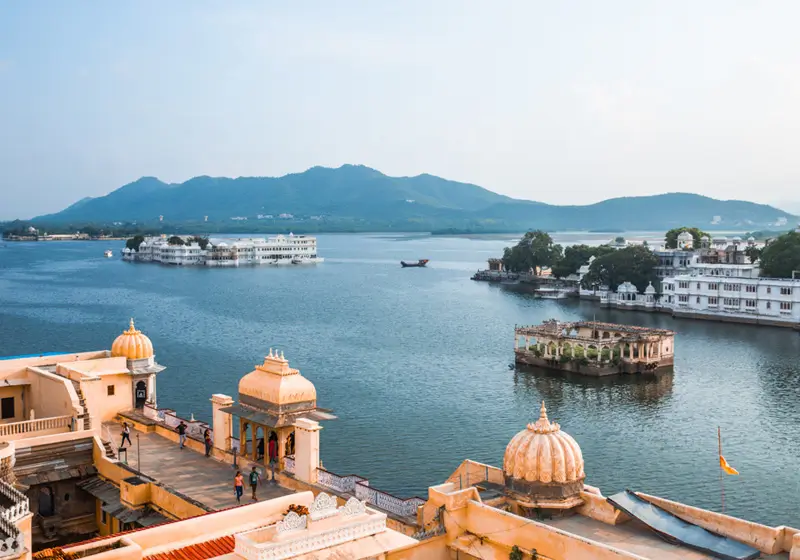
Udaipur offers a different style of heritage stay because lake views become part of the accommodation decision.
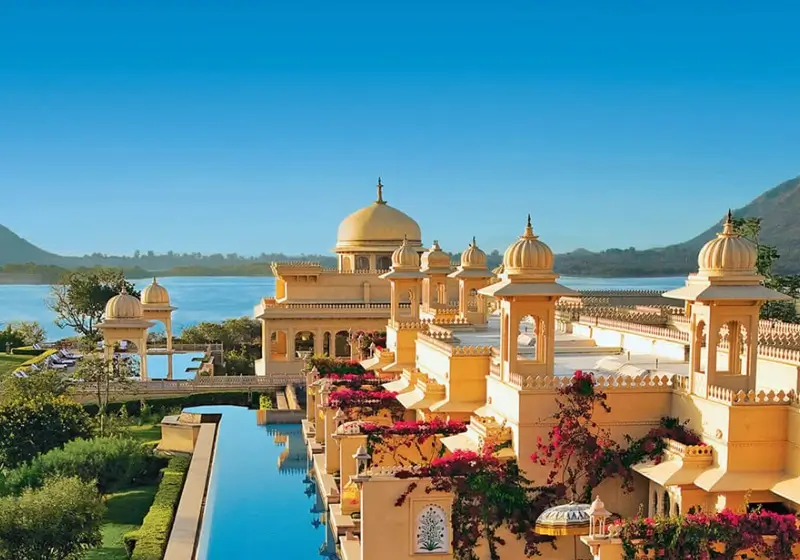
A boutique haveli stay in Udaipur can place guests within or near the historic city while offering rooftop or room views towards lakes, palaces and old buildings.
Lake-facing rooms can cost significantly more than non-view rooms in the same hotel.
The premium may be worthwhile for travellers who intend to spend time at the property, but it should be an informed choice. A room described as “lake view” may offer a partial angle rather than a completely unobstructed panorama.
Ask for the exact room category and view description.
Old Udaipur also contains narrow streets and pedestrian-heavy areas. Vehicle access should therefore be checked carefully.
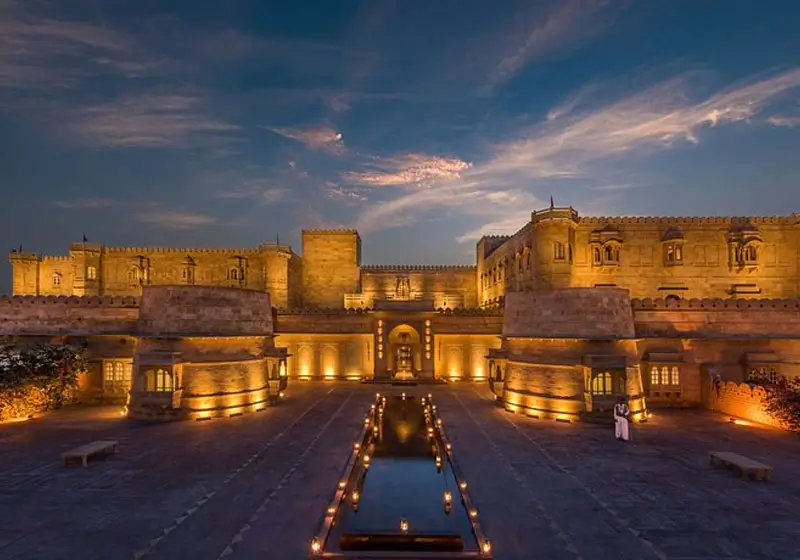
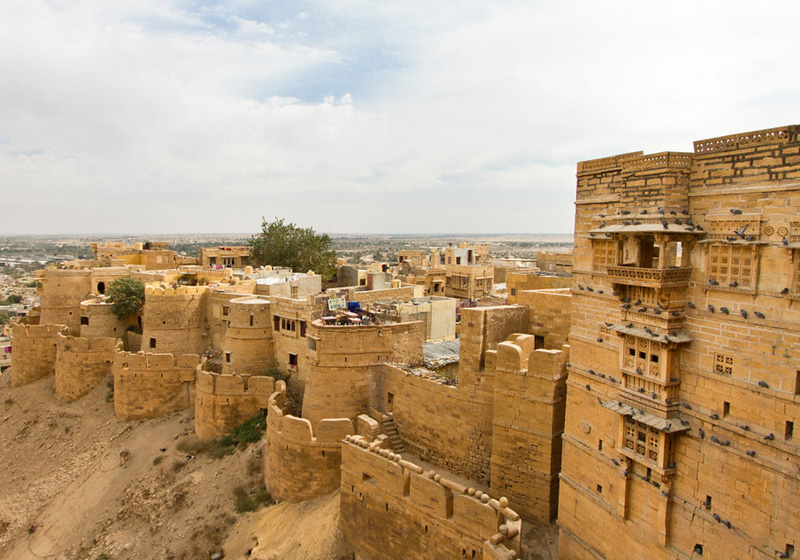
Jaisalmer introduces another architectural character, with golden sandstone buildings and desert surroundings.
A Jaisalmer heritage haveli hotel may contain carved stone façades, rooftop dining and views of the fort or historic city. Travellers should distinguish between accommodation inside the fort and properties elsewhere in Jaisalmer because location affects access, views and the type of stay.
The city can also be combined with a desert stay.
A night in a haveli followed by a night at a quality desert camp provides two contrasting forms of accommodation. However, travellers who dislike frequent packing may prefer two or three nights in one base with a desert excursion.
Smaller Rajasthan destinations can be particularly rewarding for heritage stays.
Historic towns and former noble estates sometimes contain restored properties where the hotel becomes one of the primary reasons to stop overnight. These locations can break up long road journeys while giving travellers time away from major tourism centres.
The route should still make geographical sense.
Adding a heritage property simply because it looks beautiful can create excessive driving if it lies far outside the natural route.
Road travel is particularly suitable for a private Rajasthan heritage hotel tour because it provides direct transportation between properties that may not sit close to railway stations or airports.
A private vehicle can collect guests from Delhi or another starting city and remain with them through multiple Rajasthan destinations.
For a couple, a sedan may be adequate when luggage is modest. An Innova Crysta or similar MPV provides more space and can be more comfortable on longer road sectors.
Four or more travellers with international luggage should consider a larger vehicle according to actual baggage volume.
Rajasthan distances need to be treated realistically.
A map can make two cities appear relatively close, but road travel still consumes a meaningful part of the day. A heritage-focused holiday should not consist of checking into a beautiful haveli late at night and leaving immediately after breakfast every day.
Two-night stays are usually more satisfying in major destinations.
The private driver also makes smaller stops easier.
Travellers can stop for lunch, photography or a suitable roadside break without being tied to a coach schedule. Where the route permits, selected smaller heritage towns can be incorporated between major cities.
Driver accommodation is normally handled separately by the transport provider or driver, depending on the arrangement. Guests generally do not need to reserve an additional room at their heritage hotel for the driver unless the quotation specifically says otherwise.
The vehicle quotation should clarify fuel, tolls, parking, interstate taxes where applicable and driver allowance.
A suspiciously low daily vehicle rate may exclude several of these components.
For a multi-day Rajasthan journey, an Innova Crysta can broadly cost around ₹5,000–₹8,000+ per day, depending on kilometres, route and inclusions. Premium vehicles cost more, while a Tempo Traveller for larger families or groups can commonly fall around ₹8,000–₹15,000+ per day.
These are practical budgeting ranges rather than fixed tariffs.
Old-city access is one area where vehicle expectations need adjustment.
A large private car cannot always reach the door of a centuries-old haveli situated inside narrow lanes. The hotel may arrange staff assistance for luggage from the nearest accessible point.
This is not necessarily poor service; it can simply be a consequence of the historic location.
Guests with mobility limitations should know this before booking.
A chauffeur-driven Rajasthan heritage tour should also leave enough free time to enjoy the hotels. If a haveli has a rooftop, courtyard, swimming pool or evening dining space, returning before dark can be part of the value of staying there.
There is little benefit in paying extra for atmospheric accommodation when every evening begins with a 10:30 PM arrival.
The price range for heritage accommodation in Rajasthan is extremely broad.
Smaller boutique havelis can sometimes offer attractive rooms at relatively accessible rates, while famous palace hotels can cost many times more than a standard five-star property.
For a good boutique haveli in Rajasthan, travellers can broadly budget around ₹6,000–₹12,000 per room per night in many destinations, depending on season, location and room category.
Stronger upper-mid-range heritage properties may fall around ₹12,000–₹20,000+ per room per night.
Premium heritage and palace-style hotels can commonly cost ₹20,000–₹50,000+ per room per night, while celebrated luxury properties, suites and high-demand dates can move well above ₹50,000–₹100,000+ per night.
Exceptional suites can cost considerably more.
These figures are broad guidance rather than fixed hotel rates.
Season has a major effect.
The same room can be priced very differently according to occupancy and demand. Festival periods, weddings, holidays and other busy dates can also reduce availability.
Travellers who require a specific historic hotel or a particular suite should book earlier than travellers who are flexible about the exact property.
Meal basis also affects comparison.
One hotel rate may include breakfast, while another includes breakfast and dinner. Taxes may be shown separately depending on the booking channel.
The traveller should compare the final payable rate rather than only the headline room price.
A private Rajasthan haveli tour package for two travellers using comfortable boutique heritage hotels and a dedicated vehicle can broadly begin around ₹18,000–₹30,000 per day for the travelling party, depending on the route and inclusions.
Using stronger premium heritage hotels, an Innova Crysta, private sightseeing guides and better room categories can move the budget towards ₹30,000–₹55,000+ per day.
Luxury palace-style accommodation can push the ground budget towards ₹60,000–₹120,000+ per day for two travellers, with particularly expensive properties taking the cost substantially higher.
The hotel category usually creates the greatest difference.
Travellers do not necessarily need luxury accommodation every night.
One effective approach is to combine smaller boutique havelis with one or two premium heritage stays. A couple might use charming mid-range heritage accommodation in Jaipur and Jodhpur, then upgrade to a special lake-facing property in Udaipur.
This keeps the trip distinctive without paying palace-hotel rates in every city.
Room upgrades should be chosen carefully.
A heritage suite can be worthwhile when it adds meaningful features such as additional space, historic interiors, terrace access or a superior view. Paying extra merely for a room category name is less useful.
The booking should identify each hotel, room category, meal basis and known major facilities.
Historic architecture can create accessibility limitations that do not exist in modern hotels.
A property may have several floors but no elevator. Another may have an elevator only in a newer wing. Courtyards may contain steps, and room entrances can have raised thresholds.
A Rajasthan heritage tour for senior travellers should therefore check accessibility at every hotel rather than assuming that a five-star rating guarantees step-free movement.
If a guest cannot comfortably climb stairs, this requirement should be stated before the reservation is made.
A ground-floor room may solve the issue in one property. Another hotel may not have suitable ground-floor accommodation at all.
Bathroom accessibility deserves equal attention.
Walk-in showers are easier for many guests than high bathtubs. Grab rails are not standard in every heritage room.
Travellers who need them should ask specifically.
Families face different considerations.
Connecting rooms can be limited in heritage properties because the original architecture was not built around modern hotel room configurations.
A family requiring two rooms with an internal connecting door should verify that exact arrangement before booking.
If connecting rooms are unavailable, a family suite or neighbouring rooms may be offered instead.
Young children also need supervision around balconies, terraces, staircases and open courtyard areas.
Historic architecture can be beautiful but may contain features designed long before modern child-safety expectations.
Parents should inspect the room and common areas on arrival.
Swimming pools are available at many heritage hotels but not all. Pool size, depth, heating and seasonal operation vary.
A property should not be rejected simply because it lacks a pool, but families who consider swimming important should check beforehand.
Luggage is another practical issue.
Historic staircases and old-city access can make very large suitcases inconvenient. Hotel porters can assist where available, but travellers should still avoid carrying unnecessary luggage through a multi-city Rajasthan trip.
Laundry can be arranged at many properties, making lighter packing possible on longer journeys.
A boutique Rajasthan holiday also benefits from allowing enough time at each hotel.
Morning tea in a courtyard, breakfast on a terrace or an evening meal overlooking an old city can become part of the trip rather than dead time between sightseeing days.
Travellers who value this atmosphere should resist an itinerary that changes hotel every night.
Make your Rajasthan holiday truly special with a stay in a private heritage haveli. Explore historic towns, admire traditional architecture and experience the royal lifestyle of Rajasthan. We can arrange personalised Rajasthan tour packages with heritage accommodation, private transportation and customised sightseeing.
Dining is an important part of many haveli stays because smaller heritage properties often use courtyards, terraces and rooftops as restaurant spaces.
A Rajasthan haveli hotel with rooftop dining can provide an atmospheric evening after sightseeing, particularly when the property overlooks a fort, lake or old-city skyline.
The quality of the view and the quality of the food should still be evaluated separately.
A beautiful terrace does not automatically guarantee exceptional cuisine.
Many heritage hotels serve a mixture of Rajasthani, North Indian and international dishes. Vegetarian travellers usually have substantial choice, while vegan guests should communicate restrictions involving dairy, ghee and butter.
Families can request less spicy food where available.
Breakfast arrangements vary according to hotel size.
A large luxury property may provide an extensive buffet. A small boutique haveli may offer a more limited buffet or an à la carte breakfast prepared to order.
Neither approach is necessarily worse.
Guests leaving early for a transfer should request packed breakfast the evening before if regular breakfast service has not started.
Alcohol service depends on the property's licensing and policies. Travellers who specifically want wine or other alcoholic beverages with dinner should confirm availability rather than assuming every boutique hotel serves them.
Service style can also differ from large international chains.
A family-run heritage hotel may feel warmer and more personal but have fewer specialised departments. A luxury palace hotel may provide highly structured concierge, dining and housekeeping services.
Travellers should choose according to the style they prefer.
The strongest heritage haveli holiday in Rajasthan uses accommodation as part of the destination itself.
The guest does not merely sleep in Jaipur, Jodhpur or Udaipur. The building contributes architecture, history, atmosphere and a sense of place to the stay.
That is what makes the category worthwhile when the property is selected carefully.
A heritage haveli hotel is generally a historic mansion, residence or heritage-style property adapted for guest accommodation. Buildings vary considerably in age and authenticity, so travellers should check the individual property's history, room design and facilities rather than relying only on the word “haveli.”
Good boutique heritage rooms can broadly cost around ₹6,000–₹12,000 per night, while premium properties may cost ₹12,000–₹50,000 or more. Luxury palace-style accommodation and suites can exceed ₹50,000–₹100,000 per night.
Many provide air conditioning, modern bathrooms, Wi-Fi and quality dining while retaining historic architecture. Facilities vary more than at standard chain hotels, so important requirements should be confirmed for the exact property and room category.
Some do and some do not. Historic buildings can contain stairs, raised thresholds and irregular layouts. Travellers with mobility limitations should request exact accessibility information before the hotel is confirmed.
Yes. Many heritage hotels welcome families, but connecting rooms, family suites and extra beds vary by property. Parents should also consider stairs, balconies, swimming pools and room layouts when travelling with young children.
Jaipur, Jodhpur, Udaipur and Jaisalmer all offer heritage-style accommodation, while smaller Rajasthan towns can also have distinctive historic properties. The best combination depends on the road route and desired number of nights.
Yes, selected properties offer lake-facing rooms or terraces. View quality differs by room category, and the best rooms can cost significantly more. Ask whether the booked room has a full, partial or indirect lake view.
Yes. A private car and driver in Rajasthan provides direct transport between multiple heritage properties and allows stops along the road. Old-city havelis may occasionally require a short walk from the nearest vehicle-access point.
Two or more nights are generally more comfortable in major destinations because they allow sightseeing as well as time to enjoy the property. One-night stays can work for smaller transit destinations but become tiring when repeated throughout the trip.
Confirm the exact room category, bed type, accessibility, elevator availability where required, air conditioning, meal basis, swimming pool if important, vehicle access and whether the property meets any family, mobility or connecting-room requirements you have.
Fill in the details below. Our expert consultant will respond within 4 hours with a bespoke itinerary crafted just for you — completely free, no obligation.