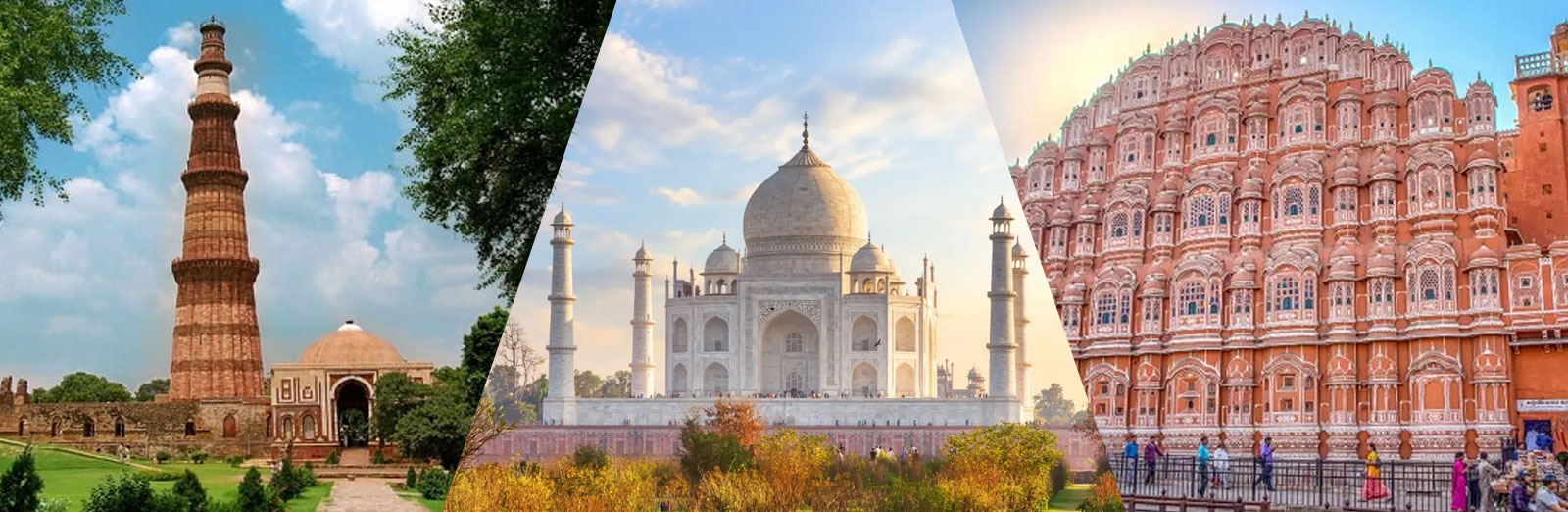
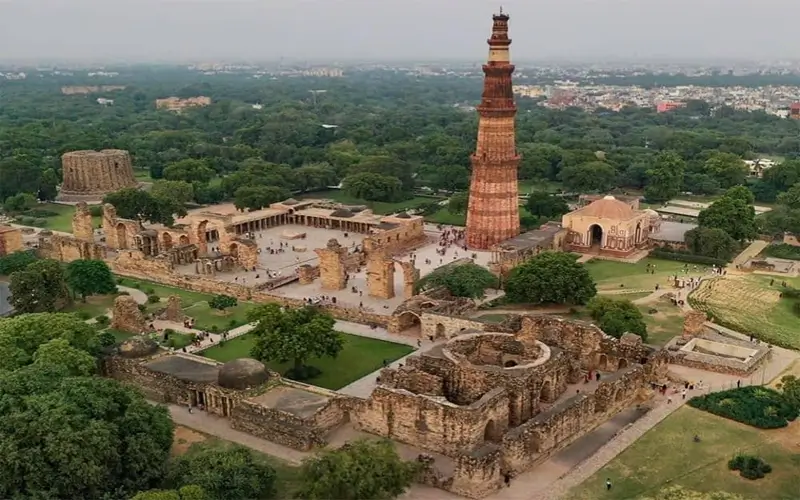
Standing proudly in South Delhi, Qutub Minar remains one of India's most visited historical monuments and an essential stop for anyone exploring the capital. Whether you are spending one day in Delhi or following the famous Golden Triangle Tour, this UNESCO World Heritage Site offers far more than just a tall stone tower. Beautiful Islamic architecture, centuries-old ruins, peaceful gardens, intricate carvings, and fascinating stories from the Delhi Sultanate come together inside one complex.
For many international visitors, Qutub Minar is the first historical monument they see after arriving in India. Its convenient location, well-maintained pathways, and historical importance make it suitable for solo travelers, families, photographers, history enthusiasts, and first-time visitors alike. Unlike many crowded attractions, the monument complex is spacious enough to spend a relaxed two to three hours while appreciating both architecture and history.
The tower rises above surrounding monuments at over 72 metres, making it one of the tallest brick minarets in the world. Every section of the structure displays detailed carvings, Arabic inscriptions, floral patterns, and architectural styles that evolved during different rulers of the Delhi Sultanate. Walking through the complex also reveals ancient mosques, tombs, gateways, and the famous Iron Pillar, each carrying its own historical significance.
Although visiting Qutub Minar is straightforward, knowing practical details beforehand makes the experience much smoother. Understanding the ticket system, best visiting hours, nearest metro station, security rules, photography regulations, and approximate travel costs can save both time and money, especially during the busy tourist season.
The Archaeological Survey of India (ASI) manages Qutub Minar, and tickets are available both online and at the entrance.
The expected ticket prices for 2026 are:
| Visitor Category | Expected Entry Fee |
| Indian Citizens | ₹40 per person |
| Foreign Tourists | ₹600 per person |
| Children below 15 years | Free |
| SAARC & BIMSTEC Nationals | Usually charged at Indian rates (subject to ASI rules) |
Visitors are encouraged to purchase tickets online through the official ASI ticketing platform during weekends and holidays. Online booking helps avoid queues, especially between October and March when Delhi receives a high number of domestic and international tourists.
Credit cards, debit cards, UPI payments, and cash are generally accepted at the ticket counters, although carrying a digital payment option is recommended.
The monument is open every day throughout the year.
Opening Time: 7:00 AM
Closing Time: 5:00 PM
Last entry is usually permitted before closing time, but arriving at least two hours earlier is advisable if you wish to explore the complete complex comfortably.
Morning hours provide cooler temperatures, softer sunlight, and smaller crowds, making them ideal for photography and sightseeing. Late afternoon is another pleasant time to visit, especially during winter months when the lighting beautifully highlights the sandstone carvings.
Delhi summers can become extremely hot between April and June. Temperatures often exceed 40°C during midday, so carrying water, sunglasses, sunscreen, and a hat is strongly recommended if visiting during these months.
Construction of Qutub Minar began around 1199 under Qutb-ud-din Aibak, the founder of the Delhi Sultanate. His original intention was to build a victory tower after the establishment of Muslim rule in northern India. Only the first storey was completed during his lifetime.
His successor, Shams-ud-din Iltutmish, expanded the structure by adding three more storeys, significantly increasing its height and grandeur. Several decades later, lightning strikes caused damage to the upper portions of the tower. During the reign of Firoz Shah Tughlaq, the damaged sections were repaired, and the final storeys visible today were completed.
Because of these successive construction phases, visitors can notice subtle differences in architectural style, stone colour, decorative motifs, and inscriptions as they look higher up the tower. The lower levels feature predominantly red sandstone with elaborate carvings, while the upper sections incorporate marble along with sandstone, reflecting changing artistic influences over time.
Over the centuries, earthquakes also caused structural damage. Restoration work undertaken by various rulers and later by British engineers helped preserve the monument while maintaining its historical character.
Today, Qutub Minar stands as one of India's finest surviving examples of early Indo-Islamic architecture and remains a symbol of Delhi's medieval history.
UNESCO included Qutub Minar and its surrounding monuments on the World Heritage List because of their outstanding architectural and historical significance. The complex reflects the transition of architectural traditions during the early Delhi Sultanate and showcases remarkable craftsmanship in stone carving, calligraphy, and structural engineering.
Beyond the towering minaret itself, the surrounding monuments create a complete historical landscape. Visitors can see one of India's earliest surviving mosques, ancient gateways, royal tombs, and the famous Iron Pillar, all within walking distance of each other. This combination of structures spanning different periods makes the complex much more than a single monument.
The preservation efforts carried out over many decades have also ensured that the site remains accessible while protecting its original architectural features for future generations.
One of the first things visitors notice is the remarkable detail carved into every section of the tower. Unlike many monuments that appear uniform from top to bottom, Qutub Minar changes subtly as it rises. Circular and angular fluted shafts alternate between different levels, while balconies supported by intricately carved stone brackets divide each storey.
The tower measures approximately 72.5 metres in height, with a base diameter of around 14.3 metres that gradually narrows to just over 2.7 metres near the top. This tapered design not only creates an elegant appearance but also contributes to the structure's stability.
The exterior is covered with verses from the Quran, decorative geometric bands, floral motifs, and Arabic inscriptions carved directly into the sandstone. Even visitors with little interest in history often spend considerable time examining these details up close because of the exceptional craftsmanship involved.
The combination of red sandstone, buff sandstone, and white marble creates visual contrast throughout the monument, particularly in the upper storeys where later restorations introduced different building materials while respecting the original design.
Add Qutub Minar to your Delhi sightseeing itinerary and discover centuries of architecture, history and fascinating monuments in one of the city's most important heritage sites.
Many visitors assume that a trip to Qutub Minar is only about seeing the famous tower, but the monument complex includes several important historical structures that are worth exploring. Most visitors spend between 2 and 3 hours walking through the complex, taking photographs, and learning about Delhi's medieval history. Since all the monuments are located within a single campus, you can comfortably visit every major attraction without rushing.
The most photographed attraction is naturally the towering Qutub Minar, but the surrounding gardens, ancient gateways, mosque ruins, and beautifully carved stonework add equally to the experience. Every corner of the complex offers a different perspective for photography, especially during the morning and late afternoon when the sunlight enhances the red sandstone.
Iron Pillar
One of the most fascinating attractions inside the complex is the Iron Pillar, which dates back more than 1,600 years. Historians believe it was originally erected during the reign of Chandragupta II and later brought to its present location.
The pillar attracts attention because it has resisted significant rusting despite centuries of exposure to Delhi's weather. Earlier, visitors were allowed to touch the pillar, but protective fencing now prevents direct contact to help preserve this remarkable piece of ancient metallurgy.
Although the pillar may appear simple at first glance, it continues to be studied by scientists and historians because of its unique composition and exceptional preservation.
Quwwat-ul-Islam Mosque
Located beside Qutub Minar, the Quwwat-ul-Islam Mosque is considered one of the earliest mosques constructed in northern India. Even today, visitors can admire the detailed stone carvings, arches, and columns that remain standing after several centuries.
Walking through the mosque gives visitors a better understanding of how the Qutub complex developed over different periods. The intricate craftsmanship visible on the pillars reflects the architectural styles that existed during the early years of the Delhi Sultanate.
Alai Darwaza
Another highlight inside the complex is the Alai Darwaza, an impressive gateway built by Alauddin Khilji in the early 14th century.
The gateway is admired for its balanced proportions, marble decorations, geometric patterns, and finely carved inscriptions. Many architecture enthusiasts consider it one of the finest surviving examples of Indo-Islamic architecture in India.
Its elegant domes and detailed stonework make it a favourite photography location inside the monument complex.
Alai Minar
A short walk from Qutub Minar stands the unfinished Alai Minar. Alauddin Khilji intended this tower to be nearly twice the height of Qutub Minar, but construction stopped after his death.
Only the massive circular base was completed, giving visitors an interesting glimpse into one of Delhi's most ambitious but unfinished construction projects.
The monument remains open throughout the year, but the overall experience changes with the seasons.
The most pleasant months are October to March, when Delhi enjoys cooler temperatures ranging between 12°C and 28°C. Comfortable weather allows visitors to explore the entire complex without feeling exhausted.
If you visit between April and June, daytime temperatures often exceed 40°C. During these months, arriving soon after opening time at 7:00 AM is highly recommended to avoid intense afternoon heat.
The July to September monsoon season brings occasional rain, making the gardens greener and the surroundings more attractive for photography. However, carrying an umbrella or light rain jacket is advisable.
For photographers, early morning and the final two hours before closing generally provide the best natural lighting.
Photography is permitted throughout most areas of the complex, making Qutub Minar one of Delhi's most rewarding locations for travel photography.
Some useful tips include:
Reaching Qutub Minar is simple because it is well connected by Delhi Metro, taxis, buses, and app-based cab services.
The nearest metro station is Qutub Minar Metro Station on the Yellow Line.
Distance to the monument:
Approximately 1.5 km
From the station you can:
The Delhi Metro remains one of the quickest and most economical transport options for tourists.
By Taxi
Approximate taxi fares:
Prices vary depending on traffic, vehicle type, and booking platform.
Many travelers combine Qutub Minar with other attractions in South Delhi.
Popular places nearby include:
Visiting two or three of these attractions on the same day creates an enjoyable sightseeing itinerary without spending excessive time travelling across the city.
A little preparation can make your visit much more comfortable.
Wear comfortable walking shoes because the monument complex covers a fairly large area with stone pathways and gardens. Carry drinking water during warmer months, although small refreshment kiosks are available outside the complex.
Large bags may be checked during security screening, so travelling with minimal luggage helps save time. Keep your ticket safely until you exit the premises, as security personnel may ask to see it.
Public washrooms are available near the entrance. Mobile network coverage is generally good throughout the complex, making it easy to use online maps or book transport after your visit.
Since the monument attracts thousands of visitors every day, weekdays are usually less crowded than weekends and public holidays.
Standing proudly in South Delhi, Qutub Minar remains one of India's most visited historical monuments and an essential stop for anyone exploring the capital. Whether you are spending one day in Delhi or following the famous Golden Triangle Tour, this UNESCO World Heritage Site offers far more than just a tall stone tower. Beautiful Islamic architecture, centuries-old ruins, peaceful gardens, intricate carvings, and fascinating stories from the Delhi Sultanate come together inside one complex.
For many international visitors, Qutub Minar is the first historical monument they see after arriving in India. Its convenient location, well-maintained pathways, and historical importance make it suitable for solo travelers, families, photographers, history enthusiasts, and first-time visitors alike. Unlike many crowded attractions, the monument complex is spacious enough to spend a relaxed two to three hours while appreciating both architecture and history.
The tower rises above surrounding monuments at over 72 metres, making it one of the tallest brick minarets in the world. Every section of the structure displays detailed carvings, Arabic inscriptions, floral patterns, and architectural styles that evolved during different rulers of the Delhi Sultanate. Walking through the complex also reveals ancient mosques, tombs, gateways, and the famous Iron Pillar, each carrying its own historical significance.
Although visiting Qutub Minar is straightforward, knowing practical details beforehand makes the experience much smoother. Understanding the ticket system, best visiting hours, nearest metro station, security rules, photography regulations, and approximate travel costs can save both time and money, especially during the busy tourist season.
Plan your visit with the right timings, entry details, transport information and practical tips.
Yes. The monument remains open throughout the week from 7:00 AM to 5:00 PM.
The expected entry fee is around ₹600 per person, subject to any revisions by the Archaeological Survey of India.
The expected ticket price is ₹40 per person.
Children below 15 years of age can generally enter free of charge.
Most visitors spend 2–3 hours exploring the entire complex.
Qutub Minar Metro Station on the Yellow Line is the nearest station.
No. Public entry inside the tower has been prohibited for many years for safety reasons.
Yes, photography is permitted in most parts of the complex.
October to March offers the most comfortable weather.
Yes. Tickets can be booked through the official ASI online ticketing system.
Licensed local guides are usually available near the entrance, and audio guide options may also be offered during peak tourist seasons.
Yes. It is one of Delhi's most family-friendly historical attractions, with open spaces, gardens, and well-maintained walking paths.
Fill in the details below. Our expert consultant will respond within 4 hours with a bespoke itinerary crafted just for you — completely free, no obligation.