South India does not announce its spirituality loudly. It reveals it slowly, through discipline, continuity, and quiet devotion that has survived centuries without interruption. Unlike regions where faith is often expressed through emotion and intensity, South India practices spirituality as a daily responsibility. Temples here are not occasional destinations. They are living institutions that regulate time, ritual, and community life. This is what makes South India temple tour packages fundamentally different from other pilgrimage journeys in India.
For devotees, a South India temple tour is not about covering as many temples as possible. It is about entering a rhythm that already exists. Bells ring before sunrise. Rituals follow precise timings. Offerings are made not out of excitement, but out of duty. This disciplined devotion creates an atmosphere where the mind gradually becomes still, allowing spiritual understanding to unfold naturally.
Covering Tamil Nadu, Kerala, and Karnataka, a well-planned South India temple journey introduces pilgrims to some of the oldest continuously practiced temple traditions in the world.
South India’s temple culture is deeply rooted in Agama Shastras, ancient texts that define every aspect of temple construction, ritual, and daily worship. These traditions were not interrupted by time or political change. As a result, many temples in South India function today exactly as they did hundreds of years ago.
This continuity creates a unique spiritual experience. Devotees do not witness reenactments of faith; they participate in living rituals. A South India temple tour therefore requires understanding and patience. Without this awareness, pilgrims may feel restricted. With it, they often feel grounded and deeply fulfilled.
Embark on a Sacred South India Temple Journey
Visit the magnificent temples of Tamil Nadu, Kerala, Karnataka, and Andhra Pradesh with our carefully planned private tours. Enjoy comfortable transportation, knowledgeable drivers, and flexible itineraries while exploring South India's rich spiritual heritage.
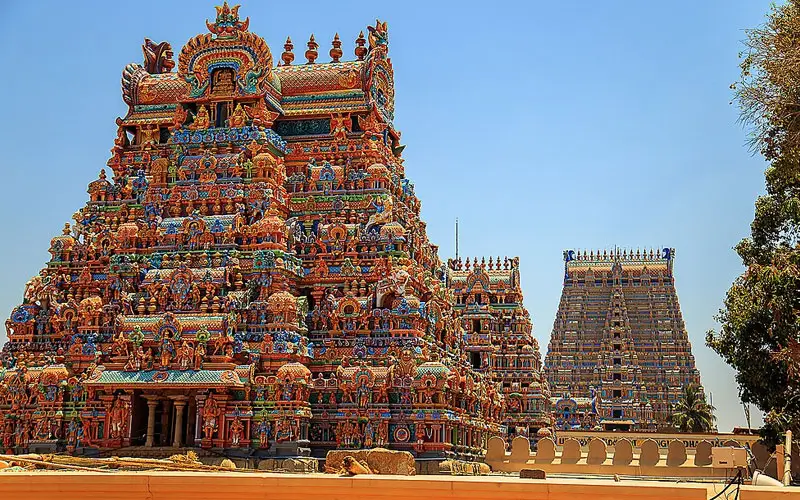
Tamil Nadu forms the spiritual backbone of South India. The state is home to thousands of temples, many of which are architectural and philosophical masterpieces. Here, devotion is structured, symbolic, and inseparable from daily life.
In Madurai, the Meenakshi Amman Temple functions like a sacred city within a city. Rituals unfold continuously, marking the passage of time. The temple’s towering gopurams are not decorative; they represent cosmic order. Pilgrims visiting Madurai often realize that worship here is not about individual emotion but collective harmony.
Further south, Rameswaram holds immense spiritual importance as one of the Char Dham pilgrimage sites. The Ramanathaswamy Temple emphasizes purification and surrender. Long temple corridors, ritual bathing, and silent prayer encourage humility. A visit to Rameswaram often feels physically demanding but spiritually cleansing, making it a core stop in any South India temple tour package.
In Kanchipuram, known as the city of a thousand temples, devotion blends with scholarship. Temples here reflect philosophical depth, attracting pilgrims interested in understanding rather than spectacle. Kanchipuram represents balance between intellectual inquiry and ritual practice.
Tamil Nadu temple tours work best when paced slowly, allowing devotees to absorb symbolism rather than rushing between shrines.
Kerala approaches spirituality with restraint and simplicity. Temples here are less monumental in scale but deeply integrated into community life. Rituals are precise, and temple access often follows traditional customs that emphasize purity and discipline.
In Guruvayur, the Guruvayur Temple stands as one of the most revered Krishna temples in India. Devotion here is intense yet orderly. Darshan requires patience and humility. Many devotees describe Guruvayur visits as emotionally grounding rather than overwhelming.
Kerala temple tours often include smaller, community-centered shrines where worship feels intimate. The spiritual atmosphere encourages silence and reflection. For senior pilgrims and families, Kerala offers a calmer pace that complements more intense temple regions.
A South India temple tour that includes Kerala provides balance, allowing the mind to rest while faith deepens.
Karnataka bridges structured temple traditions with natural serenity. Temples here often stand amid hills, rivers, and forests, creating environments conducive to contemplation.
In Udupi, devotion centers on simplicity and service. The Krishna Temple of Udupi emphasizes humility, daily discipline, and community worship. Pilgrims visiting Udupi often feel a sense of inner quiet that lingers long after darshan.
In Shravanabelagola, spiritual focus shifts toward renunciation and self-control, reflecting Jain traditions that coexist peacefully with Hindu practices. This coexistence highlights South India’s inclusive spiritual fabric.
Karnataka’s temple circuits often feel meditative, making them ideal for pilgrims seeking reflection rather than ritual intensity.
South India temples follow strict customs regarding dress, entry, and behavior. These are not restrictions but expressions of respect. Pilgrims unfamiliar with these traditions may initially feel constrained, but understanding their purpose reveals deeper meaning.
A well-designed South India temple tour package prepares pilgrims gently, explaining customs without judgment. This preparation transforms compliance into conscious participation.
One of the most transformative aspects of South India temple tours is ritual discipline. Fixed timings, structured movement, and silence reduce mental noise. Over time, pilgrims often notice a shift in their own behavior. Patience replaces urgency. Observation replaces reaction.
This internal change is subtle but powerful. It explains why devotees often describe South India pilgrimages as grounding rather than dramatic.
South India temples should not be rushed. Covering fewer temples with deeper engagement yields far greater fulfillment than attempting exhaustive itineraries.
A thoughtful South India temple tour spaces visits, includes rest, and allows reflection. This approach is especially important for senior devotees and families.
Explore South India's Timeless Temples in Comfort
Discover centuries-old temples, remarkable Dravidian architecture, and sacred pilgrimage destinations with our expertly organized South India temple tours. Travel in a private vehicle with an experienced driver and enjoy a smooth, hassle-free spiritual journey.
For NRIs, South India temples offer a connection to living traditions that textbooks cannot convey. Rituals practiced exactly as they were centuries ago provide cultural grounding.
Guided tours help NRIs understand symbolism, etiquette, and philosophy, turning unfamiliar practices into meaningful experiences.
Transformation in South India does not come from emotional intensity. It comes from discipline. By the end of the journey, pilgrims often feel calmer, more centered, and less reactive.
This transformation is not temporary. It subtly influences daily life long after the pilgrimage ends.
In a world driven by speed and convenience, South India’s temples offer an alternative rhythm. They remind devotees that faith is not about expression alone, but about consistency and conduct.
A South India temple tour package therefore offers something rare: alignment.
Tamil Nadu, Kerala, and Karnataka form the core of most temple circuits.
Yes, with proper pacing and guidance, they are highly suitable.
Yes, rituals follow ancient Agama traditions and fixed schedules.
Yes, understanding customs enhances respect and experience.
Yes, they are ideal for multigenerational pilgrimage.
They are more calming and disciplined than emotionally intense.
Yes, Kerala offers calm and simplicity within temple journeys.
It houses the largest concentration of ancient living temples.
Yes, they reconnect with uninterrupted traditions and philosophy.
Inner stillness, discipline, and long-lasting spiritual grounding.
Fill in the details below. Our expert consultant will respond within 4 hours with a bespoke itinerary crafted just for you — completely free, no obligation.